On this page
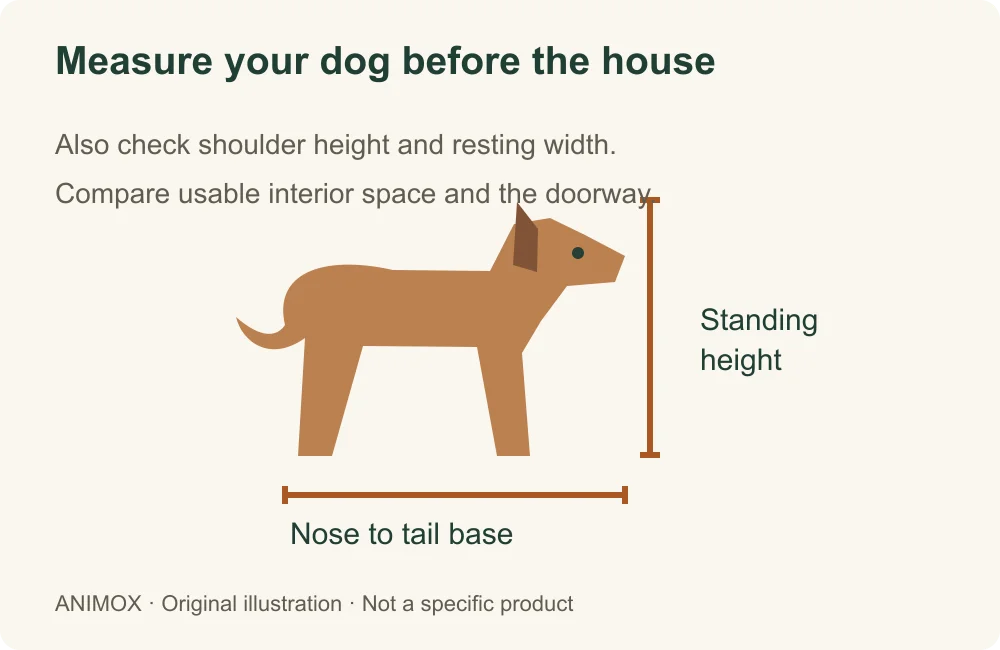
How big should a dog house be? A dog house should be big enough for your dog to walk through the doorway comfortably, stand naturally inside, turn around without bumping the walls, and lie down without crowding. It should not be so large that it becomes hard to keep warm. Bigger is not automatically better, especially in cold weather. The right size depends on your individual dog’s measurements, not just its breed or weight.
This guide explains how to measure your dog, how to compare those numbers against a house’s real interior dimensions, what to look for in a doorway, and how climate, breed variation, and indoor or outdoor use change the answer.
How to Measure Your Dog
Accurate measurements are the foundation of choosing the right dog house size. Use your actual dog’s dimensions rather than breed averages, because individual dogs within the same breed can vary noticeably. A soft tape measure and a helper make the job much easier.
The Four Measurements That Matter
- Standing height: Measure from the floor to the top of your dog’s head while it stands naturally. This helps you judge interior ceiling height.
- Shoulder height: Measure from the floor to the top of the shoulder blades (the withers). This is the key number for doorway height.
- Length: Measure from the tip of the nose to the base of the tail. This tells you how much floor length your dog needs to stretch out and turn.
- Resting width: Measure your dog while it lies curled or sprawled in its favorite position. Some dogs curl tightly; others sleep stretched on their side.
Tips for Accurate Measuring
- Measure on a flat floor while your dog stands relaxed, not stretched up or crouching.
- Take each measurement twice and use the larger result.
- Write your numbers down in one unit (inches are common in the US) so comparisons stay consistent.
- Observe how your dog actually sleeps for a few days before deciding on floor space.
Dog House Size Chart: How to Use Measurements
Rather than relying on a generic chart, build a personal measurement table. Put your dog’s dimensions in one column and each candidate house’s usable interior height, length, width, and doorway size in the others. This makes it easy to spot a house that looks right in photos but falls short in practice.
Personal Comparison Worksheet
Illustrative Example (Not a Universal Rule)
The table below is illustrative only. It uses hypothetical dogs to show how the comparison works. It is not a sizing formula, and your own numbers should always drive the decision.
In every case, leave practical movement clearance without assuming one universal formula fits all dogs. Account for bedding thickness, which reduces usable ceiling height, and for how your dog actually moves.
Getting the Doorway Right
Doorway height is one of the most overlooked parts of dog house sizing. A dog that has to squeeze or crawl may simply refuse to use the shelter. Use shoulder height as your main reference: your dog should be able to pass through with only a slight dip of the head, not an excessive crouch.
- Height: Compare doorway height directly with shoulder height, then watch your dog enter if possible.
- Width: The opening should clear your dog’s widest point, usually the chest or shoulders.
- Threshold: A raised floor or lip adds a step. Older dogs or dogs with mobility issues may struggle with high thresholds.
- Weather protection: An offset doorway or door flap can reduce drafts in outdoor shelters. Make sure your dog is comfortable using a flap before relying on it.
Why Breed Averages Can Mislead You
It is tempting to shop by breed label, such as “fits Labradors,” but these labels are broad estimates. Two dogs of the same breed can differ in height, length, and build, and mixed-breed dogs rarely match any single profile. Body shape matters too: a long, low dog needs floor length more than ceiling height, while a tall, leggy dog needs headroom and a taller doorway.
Use breed guidance only as a starting filter. Then confirm with your own measurements and each manufacturer’s listed internal dimensions.
Dog House Sizes for Large and Giant Breeds
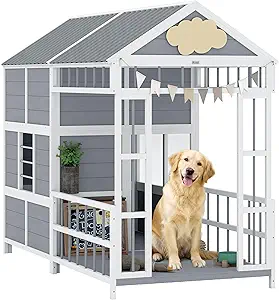
Large breeds need adequate turning room and a doorway they can pass through without crouching excessively. Many mass-market “extra-large” houses are designed around an average large dog and may feel tight for broad-chested or tall individuals.
Giant breeds may need purpose-built structures. When shopping, check internal, not shipping-box, dimensions. Listed product sizes often describe the exterior footprint, and wall thickness, roof pitch, and raised floors can reduce usable space considerably.
Why an Oversized Dog House Can Be a Problem
In cold weather, a very large uninsulated shelter may be harder to keep comfortable, because there is more air space for a dog’s body heat to warm. A snug fit is often preferable for outdoor winter use. Still, size is only one factor. Insulation, dry bedding, a raised floor, ventilation, and appropriate placement are as important as size.
Insulation
Insulated walls and roof help moderate interior temperature in both cold and hot conditions.
Dry Bedding
Bedding must stay dry to be useful. Factor its thickness into ceiling height.
Raised Floor
Lifting the floor off the ground helps keep out moisture and ground cold.
Ventilation
Airflow reduces condensation and heat buildup without creating direct drafts on your dog.
Placement
Position the house away from prevailing wind, standing water, and constant direct sun.
Indoor vs Outdoor Dog House Sizing
Indoor Dog Houses
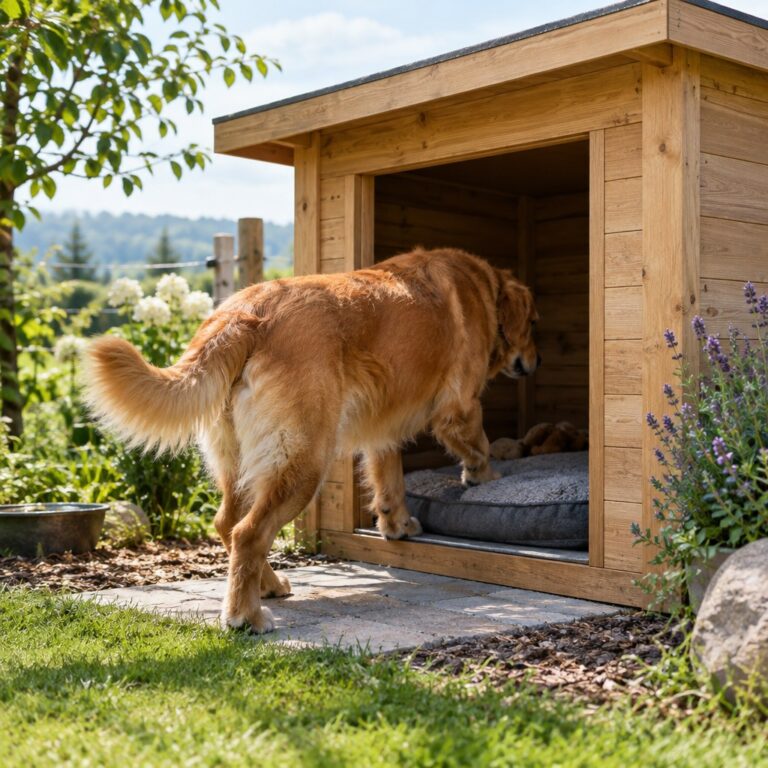
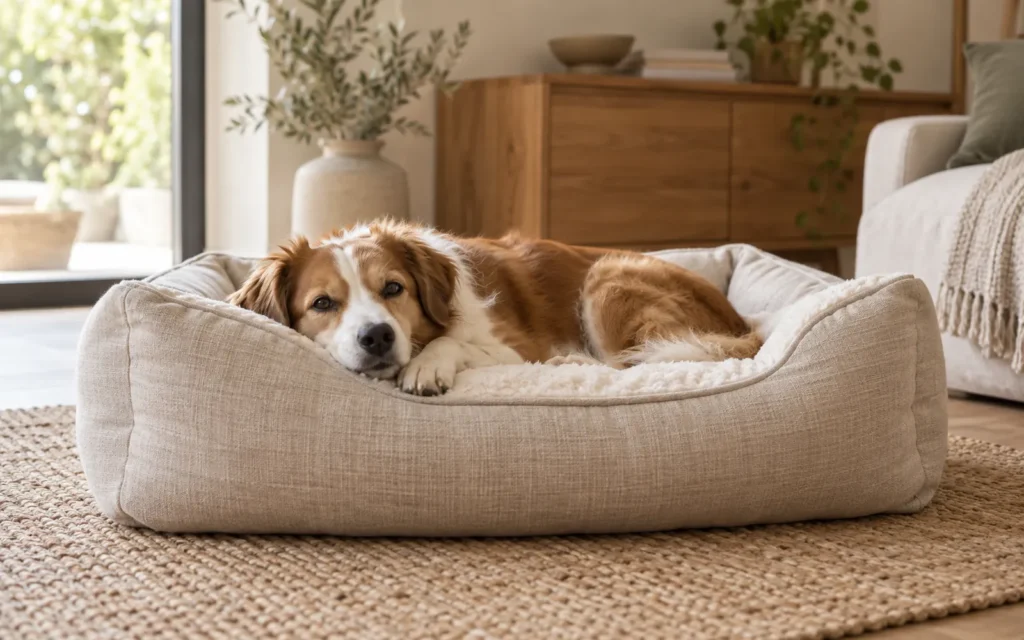
Indoor decorative houses are often used as optional resting spaces, a cozy den inside a climate-controlled home. Because temperature is not a concern, you can choose slightly more generous dimensions if your dog likes to sprawl, as long as it still fits your room and your dog uses it.
Outdoor Dog Houses
Outdoor shelters must also protect against wind, rain, and temperature extremes, so sizing becomes a balance between comfort and heat retention. Outdoor houses must not replace suitable indoor accommodation during unsafe weather. During extreme heat or cold, bring your dog inside.
Common Sizing Mistakes
- Relying on exterior dimensions: Walls, roof shape, and floor framing all reduce usable space.
- Assuming all dogs of a breed are equal: Measure your own dog every time.
- Overlooking doorway height: A roomy interior is useless if the entrance is uncomfortable.
- Forgetting bedding thickness: Thick bedding can noticeably lower headroom.
- Ignoring future growth: Puppies outgrow small houses quickly.
- Buying “bigger to be safe” for winter: Extra space may make an outdoor shelter harder to keep warm.
Frequently Asked Questions
Should a dog house fit two dogs?
Only if each dog has adequate space and the ability to rest separately. Many dogs prefer their own shelter, and sharing can cause tension. Separate houses are often the simpler choice.
Can a puppy grow into an adult-sized house?
Yes, but supervise comfort and climate conditions. A large house may feel drafty or cold for a small puppy, so add appropriate bedding and keep the puppy indoors in unsafe weather.
Should my dog be able to stand up inside a dog house?
Yes. Your dog should be able to stand naturally, turn around, and lie down comfortably. Check this against usable interior height after bedding is added.
How tall should a dog house door be?
Use shoulder height as your reference. Your dog should enter without crouching excessively. Compare the listed doorway height against your measurement and watch how your dog moves through it.
Is there a standard formula for dog house size?
No single formula fits every dog. Body shape, sleeping style, climate, and house design all matter. Your own measurements compared with real interior dimensions are more reliable than any generic rule.
Summary and Next Step
The best dog house size is the one that fits your dog, not the biggest one available. Measure standing height, shoulder height, length, and resting width. Compare those numbers with each house’s usable interior and doorway dimensions. Avoid oversized shelters for outdoor winter use, and remember that insulation, dry bedding, a raised floor, ventilation, and smart placement matter as much as size. Your next step: take your dog’s measurements today and build your comparison table before you shop.
Compare real shelters against your measurements
Affiliate disclosure: ANIMOX may earn a commission through eligible merchant links, at no extra cost to you. These examples illustrate different catalog formats; they are not a size prescription for your dog.
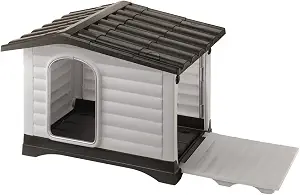
Ferplast Dog Villa Indoor and Outdoor Dog House for Small Dog Breeds, Measures 28.75L x 23.23W x 20.87H Inches, Ventilated with Patented Fold-Out Porch, Cream with Dark Brown Bottom, Part # 87253099
Use the current product details to check usable interior dimensions and doorway clearance. Do not infer fit from the product’s outer dimensions, breed label or photograph.
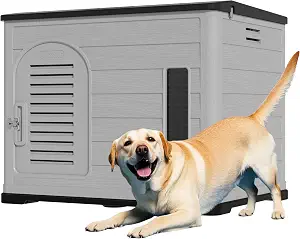
XLarge Durable Plastic Dog House for Big Dogs – Indoor Outdoor Double-Layer Insulated Doghouse with Open-Top Cover, Lockable SlidingDoor, Elevated Floor (46”L*38”W*39”H)
Use the current product details to check usable interior dimensions and doorway clearance. Do not infer fit from the product’s outer dimensions, breed label or photograph.
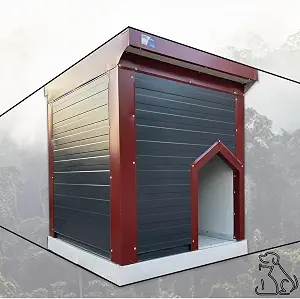
SODEF Prefabricated Insulated Dog House for Large Breeds – Weatherproof Outdoor Pet Shelter – Antrasit-Bordo
Use the current product details to check usable interior dimensions and doorway clearance. Do not infer fit from the product’s outer dimensions, breed label or photograph.
For larger models, compare our large dog house picks; for passive cold-weather features, see the insulated dog house guide.
A final fit check before assembly
Write down the doorway width and height, usable floor length and width, and the lowest usable ceiling height. Deduct space taken by a thick bed, liner, divider, or entry tunnel. When those figures are missing, ask the seller instead of converting an exterior measurement into an assumed interior one. Use tape on the floor to mark the proposed sleeping area and observe whether your dog can settle naturally.
A second dog requires its own resting space and an escape route; doubling a weight limit is not a sizing method. Compare the Large Dog Houses hub with our large-dog shortlist, but judge the dimensions of each model individually.
Further Reading
Explore our Dog Houses guides for related buying considerations. For additional background on outdoor shelter design, see the Winnipeg Humane Society dog house brochure.
Ready to Compare Dog Houses?
Editorial note: This guide is informational and does not claim hands-on product testing or veterinary review.