On this page
A wooden dog house can be a good fit when you want a shelter that feels substantial, looks at home in a yard, and offers more design variety than a basic molded-plastic kennel. But wood alone does not make a shelter weatherproof, insulated, or durable. Roof design, floor elevation, ventilation, framing, and maintenance matter just as much.
Affiliate disclosure: ANIMOX may earn a commission when you purchase through eligible product links, at no additional cost to you.
This guide compares ten wooden dog houses currently listed on ANIMOX. We have not hands-on tested these products. The comparisons are based on product information in our catalog and the features described by the manufacturer or merchant, so always confirm current dimensions, materials, availability, and care instructions before ordering.
Wooden dog house comparison at a glance
| Model | Best reason to compare it | Notable listed feature | What to verify |
|---|---|---|---|
| COZIWOW 59″ | Insulated large-breed shelter | Asphalt roof, insulated design | Interior space and liner construction |
| Aivituvin AIR74 | Indoor/outdoor flexibility | Raised feet, iron frame | Usable interior dimensions |
| Giantex 42.5″ | Cleaning access | Openable asphalt roof | Roof hardware and floor support |
| PawHut porch model | Covered transition area | Porch and tilt roof | Porch footprint vs sleeping area |
| ZENTAVO 55″ | Large-dog use | Iron frame | Weight support and doorway size |
| PawHut 56″ | Outdoor maintenance | Openable roof, removable floor | Weather sealing around moving parts |
1. COZIWOW 59″ Wooden Insulated Dog House
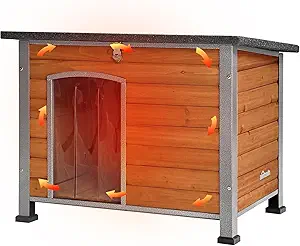
The COZIWOW 59-inch wooden dog house is one of the more winter-oriented options in this group. Its listing combines a wooden structure, an asphalt roof, insulation-focused construction, and sizing aimed at medium to large dogs.
This is the kind of wooden dog house to compare if cold-weather protection matters, but the word “insulated” still needs unpacking. Check whether the insulation is built into the walls or supplied as a removable liner, and verify the usable interior dimensions after that material is in place.
2. Aivituvin Outdoor & Indoor Wooden Dog Kennel
The Aivituvin AIR74 is listed for both outdoor and indoor use and adds raised feet plus an all-around iron frame.
The raised base is useful to compare when the shelter will sit on a patio or another surface where moisture can collect. The iron frame may also appeal to buyers who want more reinforcement around a wooden structure. Confirm how much the frame adds to the external footprint and whether all floor sections remain easy to clean.
3. Giantex 42.5″ Large Wooden Dog House
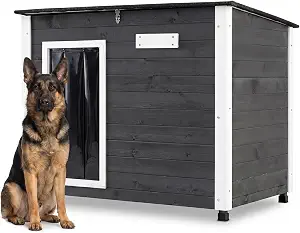
The Giantex 42.5-inch wooden dog house stands out for an openable asphalt roof. That can make cleaning and inspection easier than reaching everything through a front doorway.
The product description also highlights spruce wood, a raised floor, and a PVC door curtain. A curtain can reduce direct airflow through the entrance, but it should not be confused with true wall insulation. Check the roof hardware and how securely the roof closes after repeated opening.
4. PawHut Wooden Dog House with Porch
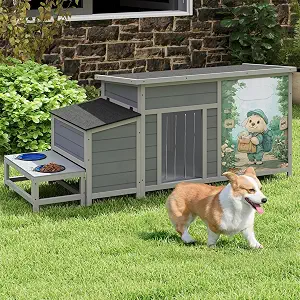
The PawHut wooden dog house with porch uses a more traditional cabin-style layout with a front porch and tilt roof.
A porch can create a useful shaded transition area, especially for a dog that likes to rest outside the enclosed sleeping space. The trade-off is footprint: part of the total dimensions may be porch rather than interior floor space. Measure both separately before deciding whether the shelter is large enough.
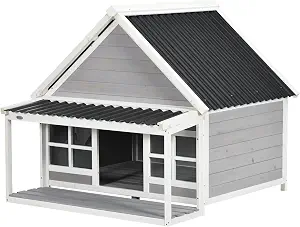
5. ZENTAVO 55″ XL Wooden Dog House with Iron Frame
The ZENTAVO 55-inch XL wooden dog house is aimed at larger dogs and adds an iron frame to the wooden structure.
For an XL wooden dog house, floor support matters as much as wall strength. Check the verified interior dimensions, doorway measurements, and how the base carries weight. Large external measurements can include thick framing or roof overhangs that do not add sleeping room.
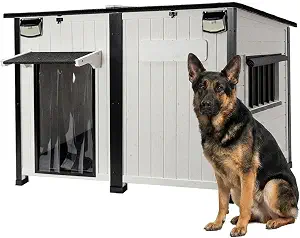
6. PawHut 56″ Wooden Dog House with Large Porch
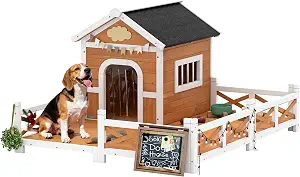
The PawHut 56-inch wooden shelter combines a large porch, openable roof, elevated base, and removable floor.
Those features make it particularly interesting from a maintenance perspective. A removable floor and opening roof can simplify cleaning, but moving parts also create seams and hardware that should be checked periodically for weather exposure.
7. GUTINNEEN Medium Wooden Dog House with Metal Frame
The GUTINNEEN medium wooden kennel is a more compact option with full metal-frame reinforcement around the structure.
This model is worth comparing if you want the look of wood but are concerned about structural edges and long-term rigidity. The merchant description positions it as a year-round outdoor shelter, but you should still verify roof construction, ventilation, and exact sizing for your dog.
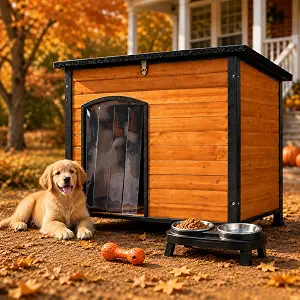
8. Gowoodhut 55.5″ XL Wooden Dog House
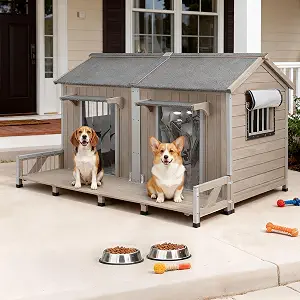
The Gowoodhut 55.5-inch XL wooden dog house combines a large footprint with two doors and an openable roof.
The two-door layout is unusual enough to deserve attention, but confirm how those openings affect draft protection and usable interior space. An openable roof can help with cleaning, provided the hinges and seams remain secure outdoors.
9. PawHut Cabin-Style Wooden Dog House
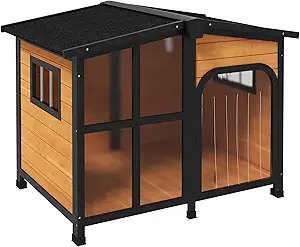
The PawHut cabin-style wooden dog house is a simpler large-dog option for buyers who want a traditional structure without as many add-ons.
With a simpler design, the decision comes down to the basics: interior dimensions, roof protection, floor elevation, ventilation, and how much maintenance the wood finish needs in your climate.
10. Ketive XL Wooden Dog House with Iron Frame
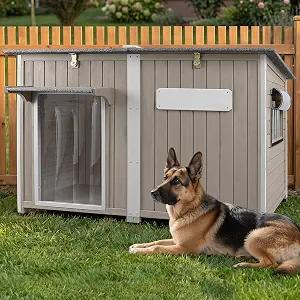
The Ketive 55-inch XL wooden dog house adds an iron frame and targets medium to large dogs.
It belongs on the shortlist when reinforcement is one of your priorities. As with every large wooden dog house, confirm the interior rather than relying on the XL label alone.
What makes a wooden dog house weather-ready?
Wood is naturally different from molded resin or plastic. It can feel warmer to the touch, is easy to build into porch or cabin shapes, and can often be repaired. At the same time, it needs protection from prolonged moisture. Roof quality, elevation from the ground, drainage, and exterior finish all influence how well a wooden dog house holds up.
Look for an asphalt, sloped, or otherwise weather-focused roof; a raised floor; and clear ventilation. None of those features make maintenance disappear. Inspect seams and fasteners after heavy weather and let the shelter dry before replacing damp bedding.
Openable roofs and removable floors: useful or unnecessary?
For daily ownership, cleaning access is one of the most practical differences between models. An openable roof can make it easier to reach rear corners, while a removable floor can simplify washing and drying.
The downside is complexity. Hinges, latches, and removable panels create additional points to inspect. If a roof no longer closes squarely or a floor panel warps, the shelter may become less weather-resistant. Choose these features because you will actually use them, not just because they sound premium.
Wooden dog house sizing: interior space beats the XL label
Measure your dog while standing and while resting in a normal sleeping position. Then compare those measurements with the usable interior. A porch, thick wall, iron frame, or roof overhang can make a product look huge on paper while leaving less sleeping space than expected.
The doorway should allow easy entry without being dramatically larger than necessary. For colder conditions, a huge open entrance can expose more of the interior to wind. For larger dogs, shoulder width and doorway height matter as much as floor length.
How to maintain a wooden dog house
Keep the base away from standing water and inspect exterior surfaces regularly. Check roof edges, joints, screws, and any area that stays damp after rain. Clean the interior before odor or moisture builds up, and allow all surfaces to dry fully.
If the manufacturer recommends a finish or treatment schedule, follow it. Avoid improvising with paints, sealants, or chemicals that are not appropriate for pet contact. For broader outdoor-care context, the American Veterinary Medical Association pet-care resources are a useful companion to product-specific instructions.
How we selected these wooden dog houses
We chose models from the current ANIMOX catalog that represent different wooden-dog-house formats: insulated shelters, porch designs, openable roofs, reinforced frames, medium houses, and XL structures. We did not rank them using merchant star ratings, and we have not independently tested weather resistance or long-term durability.
The goal is to make the comparison easier before you open the individual product page and verify current dimensions, merchant terms, availability, and material details.
Wooden dog houses for hot vs cold climates
A wooden dog house can work in different climates, but the details you prioritize should change. In colder conditions, floor elevation, draft protection, roof integrity, and verified insulation become more important. In warmer regions, shade and ventilation move to the top of the list.
Wood can absorb heat from direct sun, especially when the roof and exterior are dark. A shelter that feels comfortable in spring may become much warmer in midsummer if it sits in full sun. Positioning the house under shade and keeping vents unobstructed can matter more than adding another decorative feature.
In colder climates, avoid assuming that wood alone equals insulation. A thick wooden wall may reduce some heat transfer, but a purpose-built insulated dog house uses additional materials or wall construction. If winter use is central to the purchase, compare the product with the models in our best insulated dog houses for winter guide.
What to inspect during the first month
Once the wooden dog house is assembled, recheck it after the first rain and after the first few weeks of use. Look for loose screws, roof movement, moisture around floor joints, and areas where the wood stays damp longer than expected.
Dogs can also reveal fit problems quickly. If your dog hesitates at the entrance, cannot turn comfortably, or regularly lies half outside the shelter, the interior dimensions or doorway may not be ideal. A product can be well constructed and still be the wrong size for a particular dog.
Openable roofs and removable floors should be tested a few times during the return period. Make sure hinges stay aligned and removable panels still sit flat after cleaning.
Price: what are you paying for?
Wooden dog houses can range from relatively simple shelters to reinforced structures with porches, insulation, storage, multiple doors, or heavy frames. A higher price may reflect more material, a larger footprint, an asphalt roof, reinforced edges, or more complicated construction.
Before paying for the most feature-heavy model, decide which features solve a real problem. A porch is useful if your dog likes resting outside the enclosed area. An opening roof is useful if you will actually use it for cleaning. An iron frame may be worthwhile for a heavier dog or a structure exposed to more wear.
Decorative details are lower priority than correct fit, weather protection, ventilation, and ease of maintenance.
Wooden shelters for different climates
Climate should change what you prioritize. In a cold, dry region, fit, doorway protection, and verified insulation may matter most. In a wet climate, roof design, drainage, raised flooring, and how quickly the structure dries become more important. In a hot climate, shade and ventilation move to the top of the list.
Wood can feel substantial, but it still absorbs and releases moisture. A shelter that stays damp for long periods may need more maintenance than the same model in a protected location. If the house will stay outside all year, inspect roof edges, joints, fasteners, and the floor more often after seasonal changes.
What to check during the first month
The first month is a useful test period. After the first heavy rain, inspect the rear corners and floor. After a windy day, check the roof and doorway. If the model has an opening roof or removable floor, use those features several times to make sure hinges, latches, and panels continue to align correctly.
Watch how your dog uses the shelter too. A dog that repeatedly lies half outside may be telling you the interior is too small, too warm, or less comfortable than expected. A dog that hesitates at the entrance may need more doorway space or time to get used to a curtain or porch layout.
Long-term ownership costs
The purchase price is only one part of owning a wooden shelter. Depending on the model and climate, you may eventually need to maintain exterior finishes, replace a liner, tighten hardware, or repair a roof section. More complex designs with porches, storage areas, or reinforced frames can add value, but they also add parts to inspect.
Before paying more, decide which features solve a real problem. An openable roof is useful if it makes cleaning easier for you. An iron frame may make sense for a heavier dog. A porch is useful if your dog actually spends time resting outside the enclosed space.
When wood may not be the best choice
Wood is not automatically the right material for every owner. If you want the easiest possible wipe-clean surface, a resin or plastic shelter may require less routine care. If the location is constantly exposed to standing water, moving the shelter or choosing a different material may be more practical than trying to seal the wood repeatedly.
The best material is the one you can maintain properly in the location where the house will actually sit.
FAQ: wooden dog houses
Are wooden dog houses better than plastic?
Not automatically. Wood offers more design variety and can be repairable, while plastic and resin are often easier to wipe clean. Construction quality, weather exposure, and maintenance matter more than material alone.
Do wooden dog houses need to be raised off the ground?
A raised base can help reduce contact with damp or cold surfaces. It still needs stable support and good drainage around the shelter.
Are wooden dog houses insulated?
Some are, but wood by itself should not be treated as proof of an insulated design. Check whether the listing identifies built-in insulation, a liner, or another specific system.
How often should I inspect a wooden dog house?
Inspect it regularly and after severe weather. Roof seams, floor condition, fasteners, and damp areas deserve particular attention.
Can a wooden dog house be used indoors?
Some models are explicitly listed for indoor and outdoor use. Indoors, footprint, floor protection, ventilation, and ease of cleaning become especially important.
For more options, browse the Dog Houses hub, compare outdoor dog houses, or see our large dog house guide.