On this page
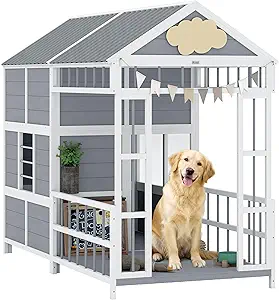
An indoor dog house gives a dog a defined resting space without necessarily feeling as enclosed as a traditional travel crate. The right design depends on where it will sit, how large the dog is, how easy the shelter is to clean, and whether you want something that can also move outside.
Affiliate disclosure: ANIMOX may earn a commission when you purchase through eligible product links, at no additional cost to you.
This guide compares nine indoor dog houses currently listed on ANIMOX. Most of them are marketed for both indoor and outdoor use, which gives you more flexibility but also means you should judge them by indoor priorities such as footprint, floor protection, ventilation, access, and cleaning. We have not hands-on tested these products, so confirm current specifications with the merchant before ordering.
Indoor dog house comparison at a glance
| Model | Material / layout | Useful for | What to verify |
|---|---|---|---|
| YITAHOME 42″ | Indoor/outdoor shelter with curtain | Large-dog general use | Interior dimensions and doorway |
| PawHut 79″ with porch and storage | Large shelter with porch and cabinet | Dedicated indoor space | Overall footprint and room access |
| Extra Large Waterproof Dog House | Large indoor/outdoor shelter | Spacious indoor areas | Floor grip and actual dimensions |
| Aivituvin large | Reinforced shelter with raised feet | Flexible indoor/outdoor use | Floor footprint and raised feet |
| Aivituvin wooden AIR74 | Wood and iron frame | Furniture-like appearance | Weight and floor protection |
| CSQOO insulated plastic | Plastic shell with liner | Easy-clean indoor spaces | Liner care and ventilation |
| CSQOO waterproof plastic | Plastic shelter | Utility-room placement | Ventilation and floor stability |
| GYMHILL resin | Resin with elevated floor | Low-maintenance use | Ventilation and floor grip |
| PawHut 40″ | Wood with removable floor | Cleaning access | Door clearance and floor protection |
1. YITAHOME Large Indoor & Outdoor Dog House
The YITAHOME 42 × 33 × 32-inch dog house is one of the clearest indoor/outdoor options in the catalog. It includes a door curtain and is positioned for larger dogs.
For indoor use, the main questions are footprint and doorway clearance. A curtain can make the space feel more enclosed, but make sure your dog is comfortable pushing through it and that the house does not block a walkway.
2. PawHut 79″ × 41″ Dog House with Porch & Storage Cabinet
The PawHut 79-inch model is much larger than a typical indoor dog house and adds a porch plus storage cabinet.
This is only realistic indoors if you have a dedicated area. Measure the room carefully, including doorways and corners, before ordering. A large shelter can become a piece of furniture rather than a small pet accessory.
3. Extra Large Waterproof Indoor & Outdoor Dog House
The extra large waterproof indoor/outdoor dog house offers a simpler large-format option.
Indoors, waterproof construction can be useful for cleaning, but stability and floor contact matter too. Check whether the base has feet, pads, or a texture that will keep the shelter from sliding on tile or hardwood.
4. Aivituvin Large Indoor & Outdoor Weatherproof Dog House
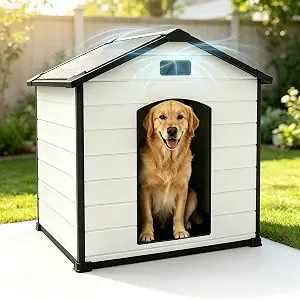
The Aivituvin large indoor/outdoor dog house combines an all-around iron frame with raised feet and is marketed for a wide range of dog sizes.
Raised feet can be helpful outdoors, but indoors they make floor protection more important. If the shelter will sit on wood, laminate, or tile, check the contact points and consider a protective mat that does not block ventilation.
5. Aivituvin AIR74 Wooden Indoor & Outdoor Dog House
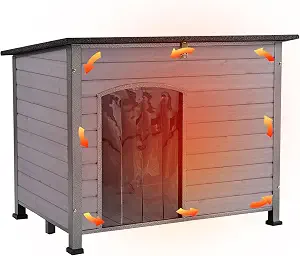
The Aivituvin AIR74 wooden dog house is another reinforced option, but with a more furniture-like wooden appearance.
That makes it easier to imagine in a mudroom, garage, covered patio, or large indoor space. The trade-off is weight and maintenance. Confirm the total footprint, floor protection, and whether the finish is suitable for the room where it will be used.
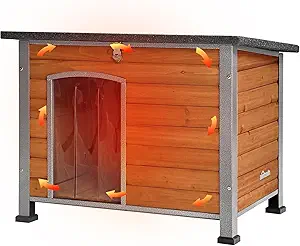
6. CSQOO Plastic Dog House with Insulated Liner
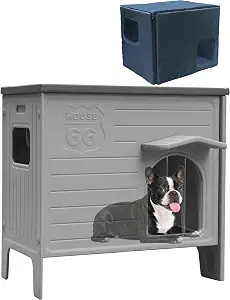
The CSQOO plastic indoor/outdoor dog house includes an insulated liner and a plastic shell.
Plastic can be practical indoors because it is generally straightforward to wipe down. If you plan to use the liner indoors, check how it attaches, how it is washed, and whether it reduces ventilation or usable floor space.
7. CSQOO Waterproof Plastic Indoor & Outdoor Dog House
The CSQOO waterproof plastic dog house is a simpler option without the same emphasis on a winter liner.
This type of shelter can suit a utility room or other easy-clean area. Check ventilation, doorway size, and whether the floor sits securely on the surface underneath.
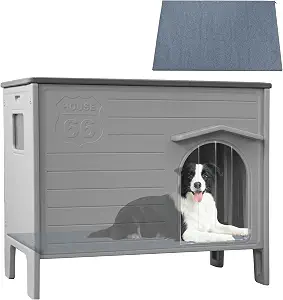
8. GYMHILL Waterproof Resin Indoor/Outdoor Dog House
The GYMHILL resin dog house includes air vents and an elevated floor and is listed for small to large dogs.
The air vents are particularly relevant indoors because an enclosed resting space still needs airflow. The elevated floor may make cleaning around the shelter easier, but verify that the base remains stable on smooth flooring.
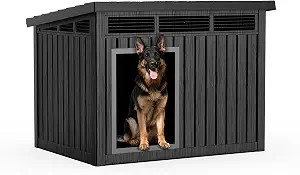
9. PawHut 40″ Wooden Indoor & Outdoor Dog House
The PawHut 40-inch wooden dog house combines air vents, an elevated removable floor, magnetic doors, and foot covers.
For indoor use, the removable floor and foot covers are especially practical features to compare. Make sure the magnetic doors are easy for your dog to use and that the raised design does not make entry awkward.
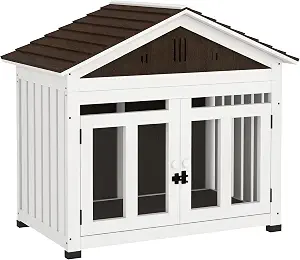
What makes an indoor dog house different from a crate?
An indoor dog house is usually intended as a resting shelter or den-like space rather than a secure transport or training crate. It may have a more open doorway, larger footprint, decorative structure, porch, or roof. That difference matters because you should not assume an indoor dog house provides the containment or safety functions of a properly designed crate.
If you are choosing between the two, think about the goal. For a quiet sleep space, a house-style shelter may be enough. For travel, veterinary instructions, or structured crate training, use equipment designed for that specific purpose.
Where should an indoor dog house go?
Place it where your dog already likes to rest, but avoid blocking hallways or creating a tight entrance between furniture. Social dogs may prefer a corner of the living room, while a dog that seeks quiet may use a bedroom or office more consistently.
Keep the shelter away from direct heating vents, radiators, or strong afternoon sun. An enclosed structure can feel warmer than the surrounding room. Ventilation openings should remain clear.
Floor protection matters indoors
Wooden and raised shelters can put pressure on a small number of contact points. On hardwood or laminate, foot covers or a suitable mat can help prevent marks and reduce sliding. Make sure any mat stays flat and does not block ventilation under an elevated floor.
Plastic and resin models can also move on smooth tile when a dog steps in quickly. Check the base before assuming a heavy shelter will stay in place automatically.
How large should an indoor dog house be?
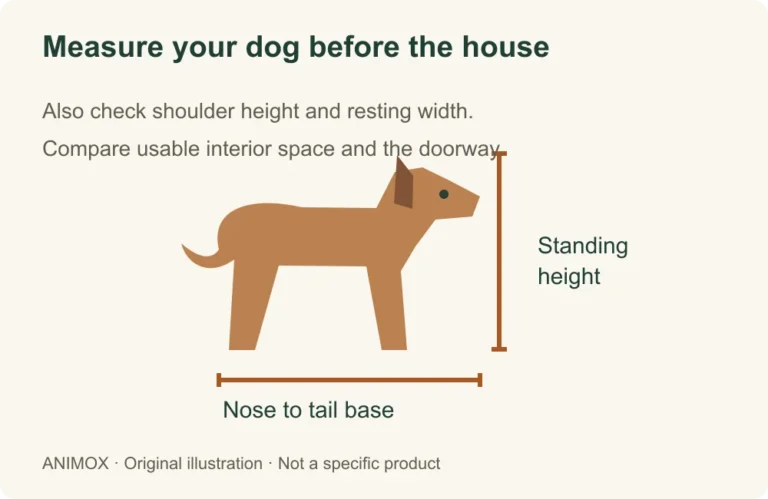
The same sizing rule applies indoors: your dog needs enough room to enter, turn around, stand naturally, and rest in a normal position. Extra-large is not automatically better. A huge structure can take over the room without adding meaningful comfort.
Measure both the dog and the available floor space. Remember to include doors, roof overhangs, porches, and storage sections in the room measurement even if they do not count as sleeping space.
Cleaning and odor control
An indoor dog house is close to the rest of your living space, so cleaning access matters. Removable floors, openable roofs, and wipe-clean plastic or resin can make routine care easier.
Do not let washable liners stay damp inside the shelter. Hair, moisture, and trapped odors build up faster in enclosed spaces. Follow the manufacturer’s care guidance and allow cleaned surfaces to dry before putting bedding back.
How we selected these indoor dog houses
We focused on products in the current ANIMOX catalog that are explicitly tagged or described for indoor use. The selection includes wood, plastic, resin, larger furniture-like structures, raised floors, liners, and easier-clean designs.
We have not hands-on tested these products, and merchant ratings are not presented as ANIMOX customer reviews. For general dog-care context beyond product selection, the ASPCA dog-care resources provide useful independent guidance.
Indoor dog house vs dog bed
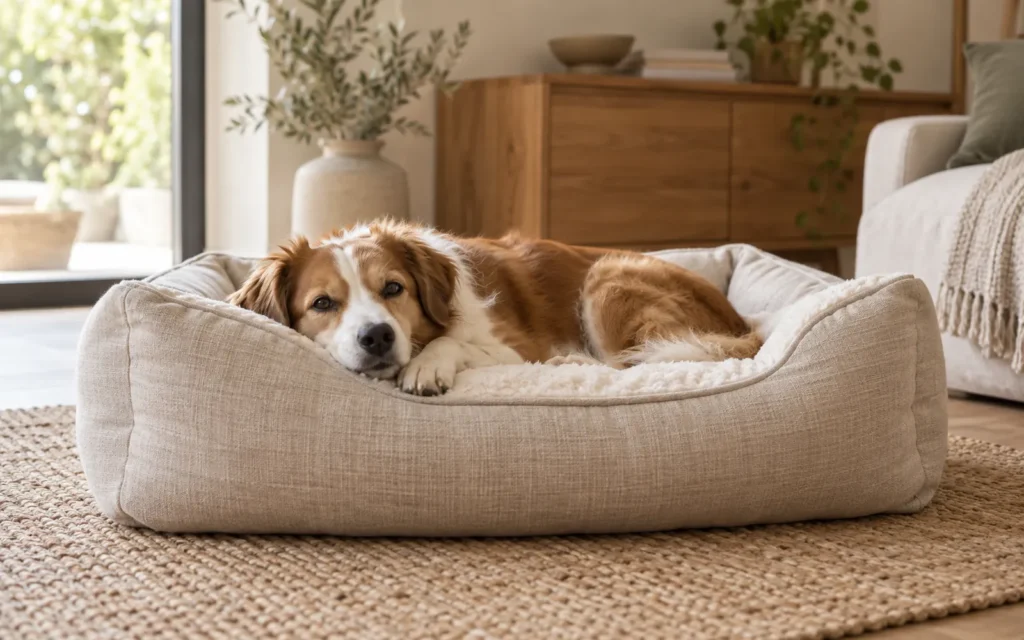
An indoor dog house and a dog bed solve slightly different problems. A bed mainly provides a sleeping surface, while an indoor dog house adds walls or a roof that can create a more enclosed den-like space. Some dogs prefer that extra enclosure; others are happier on an open bed where they can see the room.
If your dog already seeks out tables, corners, or covered spaces to sleep, an indoor dog house may feel natural. If your dog stretches out in the middle of the room, a large open bed may make more sense. You can compare both formats in our best dog beds guide.
Indoor dog houses for apartments
In an apartment, footprint becomes one of the most important buying factors. Measure the intended floor area before comparing products, and remember that a porch, roof overhang, storage cabinet, or raised base can make the total structure much larger than the sleeping compartment.
Noise matters too. A plastic shelter can sound different from wood when a dog moves inside, while a heavy wooden structure may be harder to reposition. If you need to move the shelter for cleaning, check the assembled weight and whether it can pass through doorways without disassembly.
For shared living spaces, choose a location where the dog can rest without blocking traffic. A corner beside a sofa can work better than a narrow hallway even when the hallway technically has enough floor space.
Ventilation and room temperature
Indoor conditions are more controlled than outdoors, but an enclosed shelter still needs airflow. Avoid placing the house directly beside a radiator, heater, fireplace, or strong HVAC vent. The air inside a small enclosed structure can feel warmer or cooler than the rest of the room.
If the house uses a fabric curtain or insulated liner, check that it does not block ventilation openings. In warmer months, removing the liner or holding a curtain open may make the space more comfortable if the manufacturer allows it.
Indoor dog house maintenance
Because the shelter is inside your home, odor and hair buildup are more noticeable. Vacuum or wipe the interior regularly, wash removable liners according to the manufacturer’s instructions, and let everything dry completely before reassembly.
Check corners, floor seams, and under elevated bases for hair and dust. Plastic and resin are usually easier to wipe clean, while wood may need more careful drying. If the shelter sits on a rug, inspect underneath periodically for trapped moisture or odor.
How to introduce a dog to an indoor dog house
Let the dog explore the shelter voluntarily. Keep the doorway open and avoid forcing the dog inside. Familiar bedding or a favorite toy can make the space feel less unfamiliar.
If the model has a curtain or magnetic door, leave it open at first if possible. Once the dog is comfortable using the shelter, you can gradually allow the door or curtain to function normally. The goal is to make the indoor dog house feel like a safe resting place, not a place the dog is pushed into.
Who may prefer each material?
Wood
Wood can look more like furniture and may suit a living room, office, or finished basement. It can also be heavier and may need more careful cleaning.
Plastic or resin
Plastic and resin are generally easier to wipe clean and may be easier to move. Check ventilation, floor grip, and whether the design looks appropriate for the room where it will stay.
FAQ: indoor dog houses
Can an indoor dog house replace a crate?
Not necessarily. A dog house is primarily a resting shelter. A crate is designed for containment and may be used for specific training, travel, or veterinary purposes.
Are plastic dog houses better indoors?
Plastic is often easier to wipe clean, but wood can look more like furniture. Stability, ventilation, size, and cleaning access matter more than material alone.
Should an indoor dog house have a door curtain?
A curtain can make the space feel more enclosed, but not every dog likes pushing through one. Make sure it can be removed or held open while the dog gets used to the shelter.
Do indoor dog houses need ventilation?
Yes. Enclosed resting spaces still need airflow, especially if bedding or liners are used.
Where should I place an indoor dog house?
Choose a quiet, stable location where your dog already likes to rest, away from strong heat sources and without blocking household traffic.
For more options, browse the Dog Houses hub, compare large dog houses, or see our outdoor dog house guide.
Before buying: check the indoor footprint
Measure the assembled house against the room, doorway, and route you will use to bring it inside. Porch and storage dimensions are not the sleeping compartment. Leave access to clean behind the shelter, and let your dog walk away freely. A large outdoor-style house can be impractical in an apartment even when the dog fits inside.
For a less enclosed resting area, compare our dog bed guide. For a shelter that will spend most of its time in the yard, use the outdoor dog house guide instead. This shortlist focuses on indoor placement, rather than ranking rain resistance.