On this page
An insulated dog house for winter can be easy to overcomplicate. A thick liner, a heating pad, and a big footprint can all sound reassuring, but none of those features matter much if the house is too large to feel sheltered, too small to use comfortably, or placed where wind and water can reach it.
Affiliate disclosure: ANIMOX may earn a commission when you purchase through eligible product links, at no additional cost to you.
Below are several large winter-oriented shelters currently listed on ANIMOX. We have not independently tested their thermal performance. Treat the product descriptions as a starting point and confirm the latest specifications with the merchant.
Insulated and heated are not the same thing
Insulation is passive: it is intended to slow heat transfer through walls, roof panels, or a removable liner. Heating is active: it uses a pad or another electrical component to add warmth.
Some houses combine both. That can be useful, but it also adds more things to check, including cable routing, outdoor electrical safety, cleaning, replacement parts, and what happens if the power goes out. Our heated dog house buying guide goes deeper into those differences.
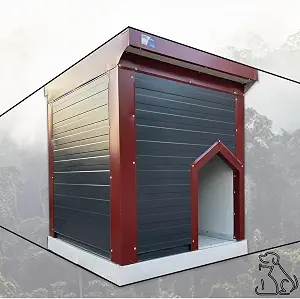
1. SODEF Prefabricated Insulated Dog House
The SODEF prefabricated insulated dog house is built around passive insulation rather than an electric pad. Its listing specifically targets large breeds and outdoor weather protection.
This is the sort of design to consider if you want insulation without relying on a power source. Verify the wall construction, interior size, ventilation, and assembly before treating it as suitable for your winter conditions.
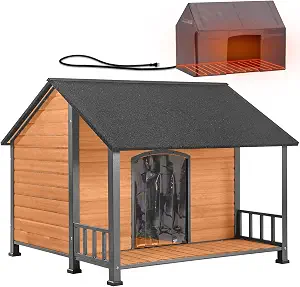
2. GUTINNEEN Extra Large Heated Insulated Dog House
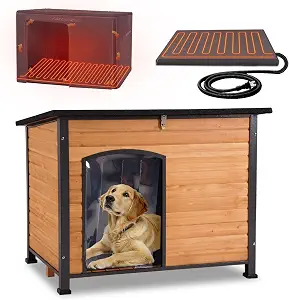
The GUTINNEEN extra large heated dog house combines an insulated enclosure with an electric heating pad and metal reinforcement.
It is a strong example of an active-heating design, but that means the electrical setup deserves as much attention as the shelter itself. Confirm outdoor-use instructions, cable protection, thermostat behavior, and cleaning requirements.
3. AIVITUVIN Heated Outdoor Dog House with Porch
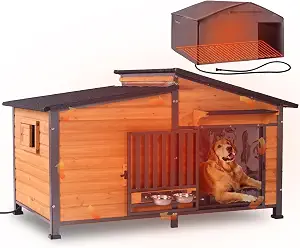
The AIVITUVIN heated outdoor dog house combines a heated pad, insulated liner, metal frame, waterproof roof, raised base, and porch.
That long feature list is useful, but it makes fit and maintenance even more important. Ask which pieces are removable, how the pad is secured, and how much sleeping room remains after the liner is installed.
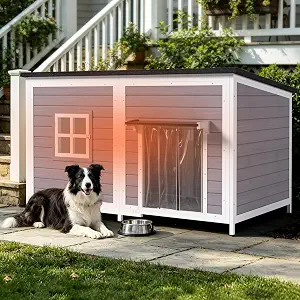
4. 59″ Extra Large Insulated Dog House
The 59-inch insulated extra large dog house is a passive option with a large footprint. It can make sense for buyers who want more room without adding an electrical component.
Large houses can be harder to keep sheltered from drafts, so do not assume more interior space is always better in winter.
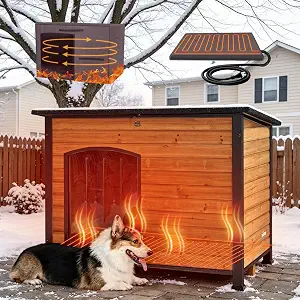
5. GUTINNEEN Large Heated Dog House with Heating Pad
The GUTINNEEN large heated dog house is another active-heating option. It is relevant for owners specifically comparing models with a supplied heating pad rather than relying on bedding alone.
Check the pad’s outdoor rating, temperature control, cord protection, and replacement options before deciding.
6. COZIWOW 59″ Insulated Outdoor Dog House
The COZIWOW insulated outdoor dog house uses a removable thermal liner rather than a built-in electric heat source.
A removable liner can be convenient for seasonal use and cleaning, but confirm how it attaches and whether the house remains weather-protected when the liner is removed.
What I would compare before paying more for winter features
First, verify fit. Then look at how the house handles moisture and wind. A heated pad will not fix a doorway facing the prevailing wind, and an insulated wall will not help much if bedding remains damp.
For any heated model, read the manufacturer’s electrical instructions carefully. For passive insulation, ask which surfaces are insulated and whether the material can be removed, cleaned, or replaced.
When a simpler shelter may be enough
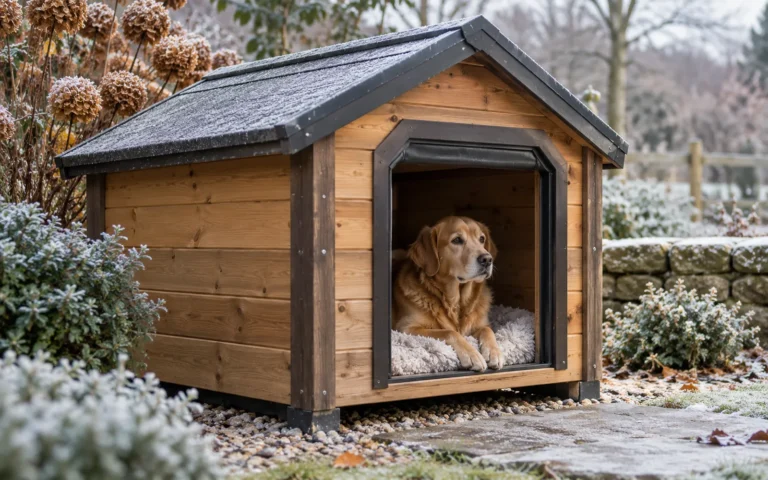
Not every dog needs the most complex winter house. A well-sized, raised, weather-protected shelter in a sensible location can be easier to maintain than a feature-heavy model. Your dog’s coat, age, health, and access to indoor shelter all matter.
If you are still deciding between materials and insulation types, start with our insulated dog house guide and the Insulated Dog Houses hub.
Cold-weather maintenance through the season
A winter shelter is not a set-it-and-forget-it product. Inspect the roof after storms, remove wet bedding promptly, and check the floor for moisture. If the house uses a removable liner, make sure it is fully dry before reinstalling it. Damp insulation can be worse than no extra liner at all because it holds moisture close to the dog.
Heated models need another layer of inspection. Look at the pad cover, cord, plug, connector, and any point where the cable passes through the wall. If your dog scratches or chews, check those areas more often. Stop using damaged electrical parts rather than trying to tape or improvise a repair.
Winter dog house comparison table
| Model | Winter approach | Notable feature | What to verify |
|---|---|---|---|
| SODEF insulated house | Passive insulation | Insulated shell | Interior size and insulation design |
| GUTINNEEN XL heated | Heat + insulation | Heating pad and insulated shelter | Electrical rating and cord protection |
| AIVITUVIN porch model | Heat + insulation | Pad, liner, raised base, porch | Usable space after liner installation |
| 59″ insulated house | Passive insulation | Large insulated enclosure | Doorway size and draft control |
| COZIWOW 59″ | Removable insulation | Thermal liner | Cleaning and attachment method |
How insulation type changes the buying decision
“Insulated” can mean several things. A double-wall shell is not the same as a removable fabric liner, and neither is the same as rigid insulated panels. If winter use is one of the main reasons you are buying, ask what the insulation actually is and where it is installed.
A removable liner can be convenient because it can be cleaned or taken out in warmer weather, but it also needs to fit securely and dry fully. Built-in insulation is simpler day to day, although it can be harder to inspect if moisture reaches the wall cavity. In every case, ventilation still matters.
Heated models add an electrical checklist
Before comparing heat output, make sure the product is intended for the environment where you will use it. Check the manufacturer’s instructions for outdoor operation, cord routing, protected connections, cleaning, and replacement parts.
If your dog chews, cable protection deserves special attention. A reinforced frame may protect wall edges, but it does not automatically protect every electrical component. Look specifically at where the cable leaves the house and whether the heating pad can shift.
It is also worth checking whether replacement pads are sold separately. A solid shelter may last longer than its original heater, so serviceability can affect long-term value.
Large can become too large in winter
Owners often size up because they want more room, but winter shelter involves a balance. The dog still needs enough space to stand, turn, and rest naturally, while a huge unused interior can feel less sheltered and may be harder to protect from drafts.
Use verified interior dimensions rather than relying on “large” or “XL.” Thick liners and insulated walls reduce usable floor space, while a porch or roof overhang can make the exterior footprint look larger than the sleeping compartment really is.
Placement is part of winter performance
Choose stable, dry ground and keep the entrance away from direct wind where practical. Avoid roof runoff and low areas that collect water. A raised floor can help, but it cannot compensate for a badly drained location. For broader seasonal safety guidance, the American Veterinary Medical Association pet-care resources include cold-weather animal safety information that complements the shelter-specific checks here.
Think beyond winter too. A position that gets useful sun in January may become too hot in July. Shade, ventilation, and removable seasonal liners are valuable when the shelter is intended for year-round use.
Winter bedding: dry matters more than thick
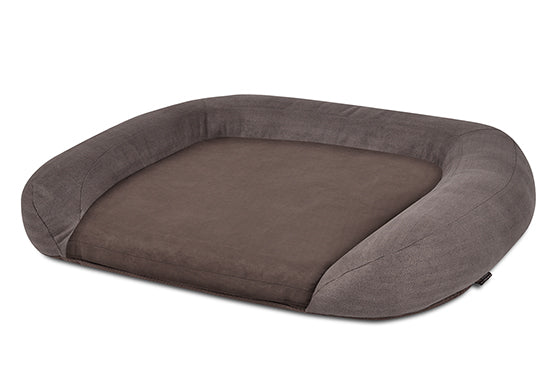
Adding more blankets is not always the answer. Damp fabric can hold moisture close to the dog and make the interior less comfortable. If the manufacturer supplies a liner or recommends a bedding type, follow that guidance.
Check bedding after rain, snow, or muddy yard use. Anything inside the house should stay clear of vents, the doorway, and electrical components.
Think about failure modes
A passive insulated house has fewer components that can fail, but it still depends on dry construction, sensible sizing, and proper placement. A heated house adds a pad, cable, connection, and power source.
Ask what happens if a liner gets wet, a heater stops working, or power is interrupted. The more the setup depends on one feature, the more important a backup plan becomes. In severe weather, that backup should be access to a safer protected environment.
How we selected these winter models
We focused on products already in the ANIMOX catalog that clearly describe insulation, heating, winter use, or a combination of those features. We did not independently measure temperature performance, and merchant ratings are not presented as ANIMOX customer reviews.
FAQ: large dog houses for winter
Is a heated dog house always better than an insulated one?
No. A heated model adds active warmth but also requires safe power and extra maintenance. Passive insulation may be simpler in some locations.
Does a door flap count as insulation?
No. A flap can reduce direct airflow through the entrance, but insulation refers to the walls, panels, liner, or similar construction.
Do winter dog houses still need ventilation?
Yes. Warmth does not remove the need to manage moisture and condensation.
Can a heated shelter stay outside in any weather?
Do not assume so. Follow the manufacturer’s weather and electrical-use limits and move the dog to safer shelter when conditions become dangerous.
What to inspect during the first week of winter use
Once the shelter is in place, check it after a cold night, a windy day, and the first period of rain or snow. Look for damp corners, condensation, shifted bedding, blocked vents, and places where wind reaches the resting area. These checks tell you more about the real setup than a product photo can.
For heated models, inspect the pad and cord at the same time. Make sure the pad has not folded or shifted and that the cable still follows the intended route. For passive insulated houses, check that liners remain attached and dry. If a removable liner repeatedly becomes damp, the issue may be placement or ventilation rather than a lack of insulation.
Price and long-term ownership
A higher winter price may reflect insulation, reinforced framing, a porch, a larger footprint, or an included heating system. Before paying more, separate features you genuinely need from features that simply make the listing look more complete.
Long-term ownership matters too. Liners may eventually need replacement, wooden surfaces may need maintenance, and heating pads may not last as long as the shelter itself. A model with replaceable components and clear care instructions can be easier to keep useful over several winters than one whose key parts are difficult to source.
Before you buy
- Confirm usable interior and doorway dimensions.
- Check whether insulation is built in, removable, or limited to certain panels.
- For heated models, verify electrical ratings and outdoor-use instructions.
- Check roof, floor, ventilation, and drainage details.
- Confirm current price, stock, warranty, and return terms with the merchant.
For electrical heating features, see our heated dog house guide. Passive insulation and an active heating pad are different buying decisions.