On this page
Dog houses for large dogs need more than an XL label. A shelter can look enormous in a product photo and still feel surprisingly tight once you account for thick walls, a porch, a sloped roof, or insulation. When comparing dog houses for large dogs, the number that matters most is the usable interior space your dog can actually move and rest in.
Affiliate disclosure: ANIMOX may earn a commission when you purchase through eligible product links, at no additional cost to you.
This guide brings together nine large dog houses currently listed on ANIMOX. We have not hands-on tested these shelters. The comparisons below are based on product information available in our catalog, so dimensions, materials, availability, and merchant claims should always be confirmed before ordering.
What matters most when choosing dog houses for large dogs?
Start with interior dimensions and doorway size. Exterior measurements can include roof overhangs, raised bases, and porches. Your dog should be able to enter comfortably, turn around, and lie down in a normal resting position without the interior feeling cavernous.
For outdoor use, also look at floor elevation, roof protection, ventilation, drainage, cleaning access, and how the panels or wooden sections are joined. “Weatherproof” is useful language, but it does not remove the need for sensible placement and routine inspection.
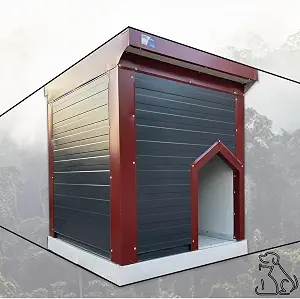
1. SODEF Prefabricated Insulated Dog House for Large Breeds
The SODEF insulated dog house is one of the more substantial large-breed shelters in the catalog. Its listing focuses on insulation, weather protection, and large dogs, which makes it relevant for buyers looking beyond a lightweight seasonal house.
Before buying, confirm the usable interior dimensions, ventilation layout, assembly requirements, and how the insulated wall system is constructed.
2. PawHut 7′ × 5′ Extra Large Walk-In Wood Dog House
The PawHut 7′ × 5′ dog house is notable for its walk-in format and very large footprint. It is the sort of shelter to consider when floor area matters more than portability.
With a structure this large, placement becomes part of the purchase decision. Check the base, roof protection, assembly space, and whether the layout gives your dog a sheltered sleeping area rather than just a large enclosure.
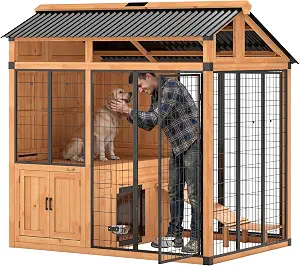
3. 59″ × 35″ Extra Large Insulated Outdoor Dog House
The 59-inch insulated outdoor dog house combines the three things many large-dog owners search for together: size, insulation, and outdoor use.
Confirm whether the published measurements refer to the outside of the house or the usable interior. Thick liners and double walls can reduce the room inside more than expected.
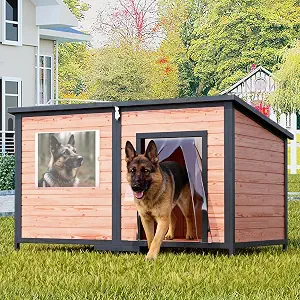
4. Garvee 54″ Large Resin Dog House
The Garvee 54-inch resin dog house is quite different from the wooden options. The listing emphasizes a waterproof resin shell, which may suit owners who want something easier to wipe down and maintain.
For resin shelters, pay attention to floor support, panel connections, and ventilation openings. A waterproof exterior still needs airflow and a dry, stable location.
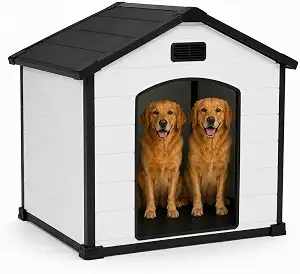
5. COZIWOW 59″ Wooden Insulated Dog House
The COZIWOW 59-inch insulated dog house uses a wooden structure with an asphalt roof and insulation-oriented features. It sits somewhere between a traditional wooden dog house and a more winter-focused shelter.
The slow-feed bowl is a useful extra, but it should not distract from the basics: doorway size, roof sealing, floor clearance, and how the liner or insulated sections are cleaned.
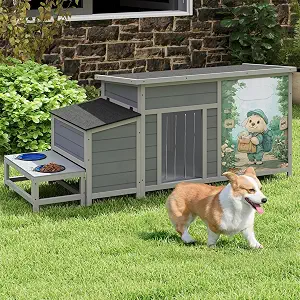
6. YITAHOME Large Dog House with Door Curtain
The YITAHOME large dog house is listed for indoor and outdoor use and includes a door curtain. A curtain can help reduce direct drafts, but it is not the same thing as insulated construction.
This is a model to compare if you want a simpler shelter and do not need an electrically heated setup.
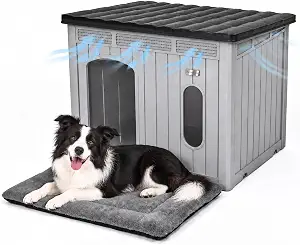
7. Elevated Weatherproof Plastic Dog House with Fold-Out Porch
The elevated plastic dog house is listed for large dogs up to 100 pounds and uses a raised floor with a fold-out porch.
That layout can be practical on a patio or damp ground, but check how much of the listed footprint is real sleeping space once the porch and doors are taken into account.
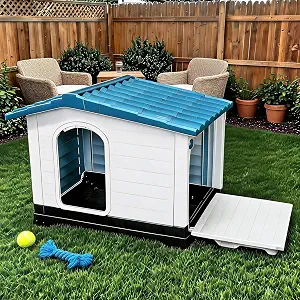
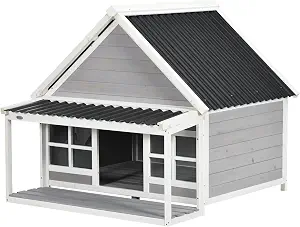
8. PawHut Wooden Dog House with Porch for Large Dogs
The PawHut wooden dog house with porch uses a more traditional design with a tilt roof and front entry. The porch may be useful as a shaded transition area, while the roof design can make cleaning access easier.
As always, interior measurements matter more than the word “large” in the title.
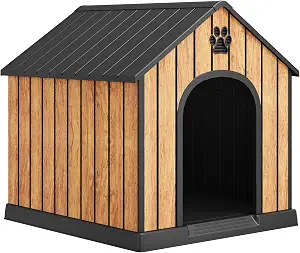
9. Waterproof Plastic Dog House for Large Dogs
The waterproof plastic dog house for large dogs is a straightforward option for buyers comparing plastic with wood. A simpler plastic shell can be convenient to clean, but ventilation, panel strength, and floor support are still worth checking.
Dog houses for large dogs: wood, plastic, or insulated?
There is no material that wins in every yard. Wood can feel substantial and is widely available in larger formats, but finishes and roofs need inspection over time. Plastic and resin are generally easier to wipe down, although panel rigidity matters. Insulated models add another layer of weather protection, but they can cost more and reduce usable interior space.
If cold-weather use is your priority, our insulated dog house buying guide explains what “insulated” can mean on different listings. You can also browse the wider Dog Houses hub.
What to inspect during the first week
Once the house is assembled, the first week tells you a lot. After rain, check the floor, corners, and roof seams for moisture. After a windy day, look for shifted panels or debris entering through the doorway. Watch whether your dog enters comfortably and can turn around without bumping the walls.
Recheck fasteners after a few days of use, especially on wooden structures. If the house rocks, flexes, or collects water where you did not expect it, address that early while you are still within the merchant’s return period.
Large dog house comparison table
| Model | Construction | Useful for | What to confirm |
|---|---|---|---|
| SODEF insulated shelter | Insulated prefabricated structure | Large breeds and colder conditions | Interior dimensions, ventilation, insulation design |
| PawHut 7′ × 5′ | Walk-in wood structure | Owners prioritizing floor area | Sleeping area, assembly space, base support |
| 59″ × 35″ insulated house | Large insulated enclosure | Large dogs needing insulation | Interior room after wall thickness |
| Garvee 54″ | Resin shell | Lower-maintenance outdoor use | Floor rigidity, vents, panel connections |
| COZIWOW 59″ | Wood with insulated features | Traditional look with winter details | Roof sealing, liner care, doorway size |
How big should dog houses for large dogs be?
The label “large” is only a category name. It does not tell you whether a particular dog can turn comfortably, whether the doorway is high enough, or how much room remains once a liner is installed. Two dogs weighing the same amount can have very different body length and shoulder height.
Measure your dog while standing and again while resting in a normal sleeping position. Compare those figures with the interior floor dimensions, not just the overall dimensions in the product title. A porch, thick wall, roof overhang, or raised base can make the outside measurement look much larger than the area the dog actually uses.
More space is not always better. A dog needs enough room to enter, turn, stand, and lie down naturally, but an oversized shelter can feel exposed and may be harder to protect from wind in colder weather.
Wood vs plastic vs resin
Wood can provide a solid traditional structure and is common in larger shelters. It also needs inspection. Roof edges, joints, finishes, and areas close to damp ground can deteriorate over time if the house is poorly placed or not maintained.
Plastic and resin are usually easier to wipe down. That can be useful for dogs that bring mud or wet paws inside regularly. With a heavy dog, however, the floor needs to be rigid enough not to flex. Panel joints and ventilation also deserve attention because an easy-clean shell is not useful if the interior becomes damp.
Insulated panels and liners add another variable. Some products use double walls, others use removable fabric liners, and some combine insulation with a heating pad. These approaches should not be treated as equivalent. If insulation is a priority, our insulated dog house buying guide explains what to verify.
Weatherproof claims: what I would actually check
A weatherproof label should lead to more questions, not fewer. Look at roof seams, where the walls meet the floor, whether the entrance has an overhang, and whether water can drain away from the base. A shelter positioned in a low point of the yard can still become damp even if the roof sheds rain correctly.
After assembly, inspect the inside after the first heavy rain. Check rear corners and the floor rather than only looking for obvious drips. Small amounts of moisture can reveal a loose panel, an assembly gap, or water entering around the doorway.
Ventilation remains necessary in every season. A sealed-feeling shelter can trap humidity from the dog’s breath, wet paws, or damp bedding. Keep vents clear and avoid pushing the house so close to a wall that airflow is blocked. For broader outdoor-safety context, the American Kennel Club’s guidance on dogs spending time outdoors is a useful reference alongside the product-specific checks in this guide.
Which dog houses for large dogs fit different owners?
For maximum space
The PawHut walk-in model is the clearest comparison point when floor area is the priority and you have enough permanent yard space.
For easier cleaning
A resin or plastic house such as the Garvee can be easier to wipe down than detailed wood. Check that the floor is strong enough and that the ventilation layout suits the intended location.
For colder conditions
The SODEF, the 59-inch insulated model, and the COZIWOW insulated house are more relevant starting points. If you also want active heat, compare them with the options in our heated dog house buying guide.
Delivery and assembly deserve attention
Large dog houses can be awkward to move and expensive to return. Check package dimensions, weight, whether assembly is required, and whether two people are recommended. If your yard has a narrow gate, stairs, or a finished patio, decide where the house will be built before delivery.
For a walk-in or large wooden structure, assembling it in the final location may be easier than carrying it afterward. Read the return policy for oversized products as well; disassembly and return shipping may be very different from returning a smaller pet accessory.
How ANIMOX selected these picks
We chose different types of large-dog shelter from the current ANIMOX catalog rather than nine almost identical products. The list includes insulated construction, walk-in wood, resin, plastic, and porch-style designs.
We have not hands-on tested waterproofing, durability, or thermal performance. Merchant ratings are not presented as ANIMOX customer reviews. The purpose of this guide is to help narrow down the format that makes sense, then verify current details on the individual product page.
FAQ: dog houses for large dogs
Is an XL dog house always better?
No. Fit matters more than the label. The shelter should allow normal movement without creating unnecessary empty space.
Do large dog houses need a raised floor?
A raised floor can help separate the sleeping area from damp ground, but it still needs stable support and good drainage around the house.
Is an insulated house necessary in winter?
That depends on climate, dog, placement, and use. Insulation can help reduce heat transfer, but it does not replace safe placement or access to more protected shelter in dangerous conditions.
Are resin houses easier to maintain than wood?
They are often easier to wipe clean, but floor strength, joints, and ventilation still need inspection.
Can two dogs share one large house?
Do not assume size alone makes a shelter suitable for two dogs. Their relationship, interior layout, exits, and individual resting space all matter.
Before you choose
- Measure your dog standing, turning, and lying down.
- Ask for interior dimensions if the listing only gives exterior measurements.
- Check floor height, ventilation, roof design, and cleaning access.
- Confirm whether insulation is built in or supplied as a removable liner.
- Check the current merchant price, availability, delivery terms, and return policy.
The best dog house is not necessarily the biggest or most expensive one. It is the shelter that fits your dog, your climate, and the place where you actually plan to use it.
If weather exposure is your main concern, compare our outdoor dog house guide as well as the size-focused picks here.