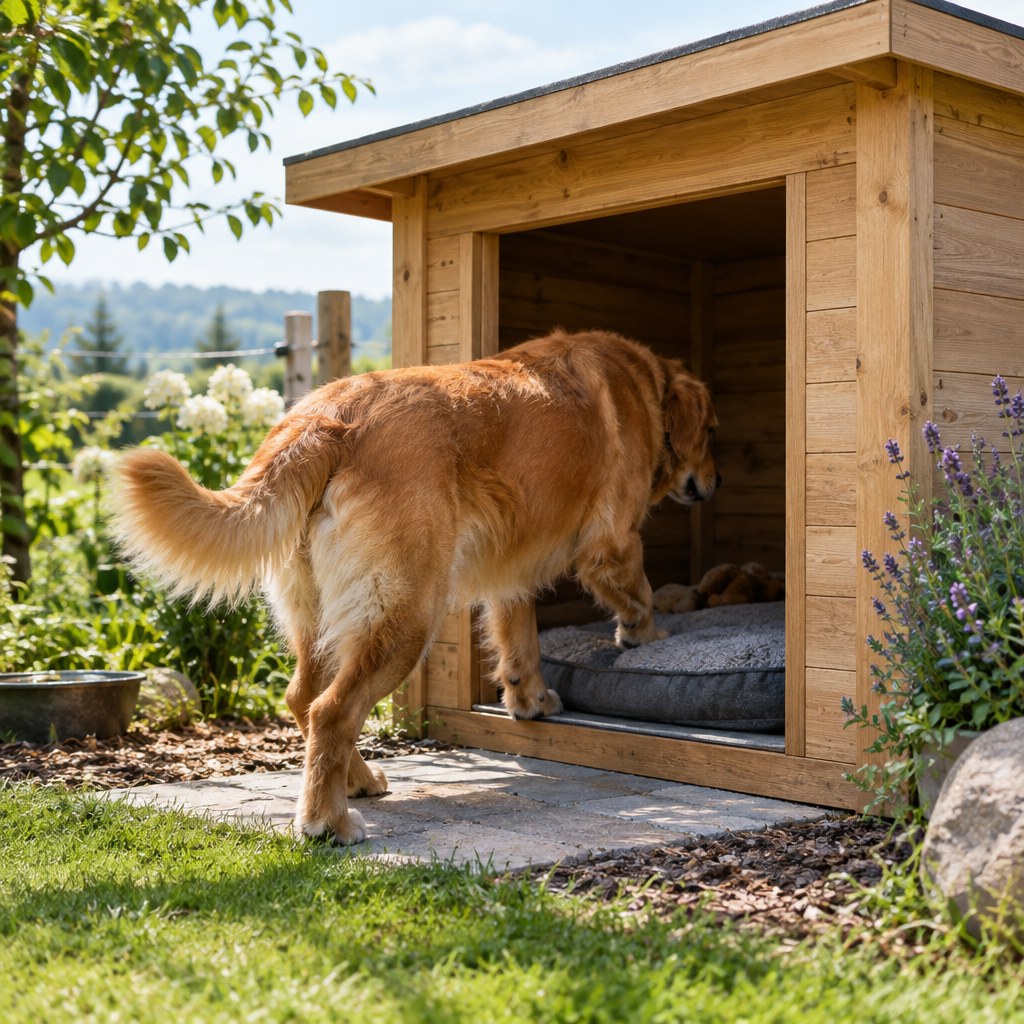
Illustrative shelter scene; not a photograph of an ANIMOX product test.
Disclosure: ANIMOX earns commissions from eligible purchases through product links on this site. This informational guide does not claim hands-on testing or veterinary review.
A dog house earns its place when your dog uses it as a dry, comfortable retreat. That might mean a shaded stop during supervised yard time or a quiet indoor nook. It cannot supply companionship, exercise, water, or protection from every kind of weather. Before choosing a model, decide what your dog needs from that particular resting spot.
A resting place, not a complete environment
Think about the job you want the house to do. A sheltered spot during supervised time in the yard is different from leaving a dog outdoors for long periods. An indoor house can give a dog a defined retreat, but an ordinary bed may do that job with less space and cleaning work.
Follow your dog’s habits before moving furniture around. A dog that naps beside the back door may want proximity to people more than an enclosed corner. Place the shelter along a familiar route, with a clear entrance and space to walk away. An open doorway can be a better introduction than a flap the dog is reluctant to push through.
What a useful shelter should provide
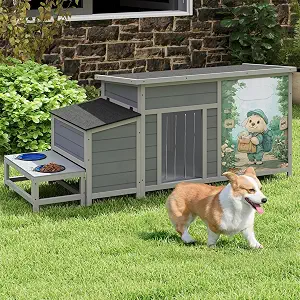
Start with usable interior dimensions. The dog should enter comfortably, stand naturally, turn, and lie down without pressing into the walls. A porch or storage cabinet does not add sleeping-room clearance. Bedding and a liner can reduce the available space.
Cleaning access matters as much as the roof shape. An opening roof lets you reach the back corners; a narrow entrance may leave you struggling to remove bedding. After rain, lift the bedding and feel the floor beneath it. Water under a dry-looking cushion signals a leak or moisture problem that another blanket will not solve.
Why a dog may avoid the house
Some dogs dislike a moving curtain, dark doorway, unstable floor, or unfamiliar surface. Others may simply prefer resting near people. Introduce the house gently and let the dog investigate without being pushed inside or confined there.
Try one change at a time: move the shelter, improve footing, or remove an optional curtain if the model permits it. If the dog continues to avoid it, provide a suitable alternative rather than treating refusal as a training problem that must be overcome.
When an indoor option is better
Indoor shelter is the safer practical choice during severe weather and when outdoor conditions cannot be kept comfortable. Dogs with reduced mobility or health concerns may need an arrangement discussed with their veterinarian. A shelter label cannot establish the needs of an individual dog.
The RSPCA’s outside-dog guidance emphasizes that meeting a dog’s physical and social needs outdoors can be difficult. Use that welfare perspective alongside product specifications, not after buying a house that solves only one part of the problem.
House, crate, or bed?
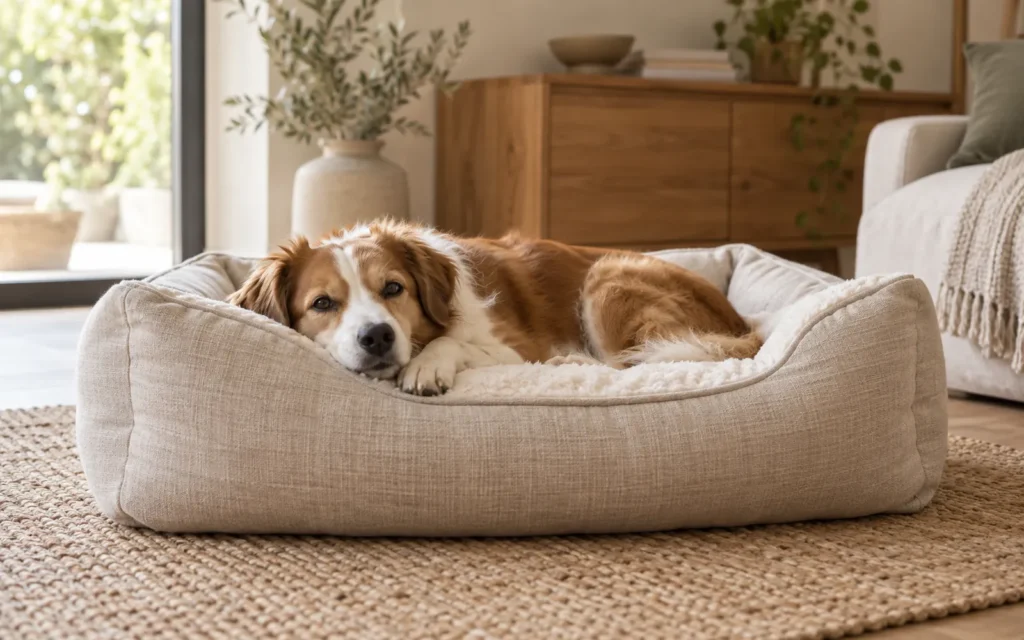
A house is a resting shelter; a crate is a management tool that needs appropriate introduction and limited, suitable use. They should not be treated as interchangeable. An open bed may be easier for a dog that wants space to stretch or quick access to people.
For product choices, use the outdoor dog house comparison, the published dog bed guide, and the Dog Houses hub. Choose the simplest setup that meets your dog’s actual needs.
Questions owners ask
Will a dog house keep my dog safe in every season?
No. Weather, placement, the dog’s condition, and supervision matter. Bring the dog into a suitable indoor space when conditions become unsafe rather than relying on insulation or a roof.
Is it a problem if my dog prefers a bed?
Not by itself. Some dogs prefer an open surface where they can stretch out and see the room. Offer that option while looking for practical reasons the house is unappealing, such as a slippery threshold or an awkward location.
Make the choice about the dog
A useful purchase solves a specific problem: shade during yard time, a quiet retreat, or a dry resting spot. If your dog already has those things and ignores enclosed spaces, a simpler bed may serve it better. The goal is a resting place your dog willingly uses.