On this page
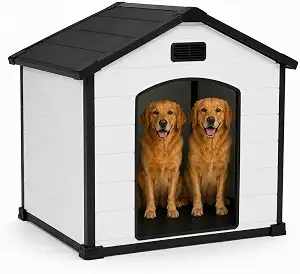
An outdoor dog house has a harder job than an indoor bed. It needs to stay stable on real ground, deal with rain and sun, allow air to move, and still be easy enough to clean. That is why “weatherproof” should be the beginning of your checklist, not the end of it.
Affiliate disclosure: ANIMOX may earn a commission when you purchase through eligible product links, at no additional cost to you.
These nine outdoor dog houses are currently listed on ANIMOX and cover wooden, plastic, resin, insulated, and porch-style designs. We have not hands-on tested them, so use the product details as comparison points and confirm current specifications with the merchant.
What to check before comparing outdoor dog houses
Look at the roof first, then the floor. A good roof should shed water away from the doorway and seams. A raised floor can help reduce contact with damp ground, but only if the structure is stable.
Ventilation matters year-round. A house that blocks every draft can also trap moisture and heat. Cleaning access is another practical point that is easy to overlook until the shelter is already in the yard.
1. Garvee 54″ Waterproof Resin Dog House
The Garvee resin dog house focuses on waterproof construction and a large outdoor format. Resin can be appealing when low-maintenance cleaning is more important than the look of a wooden shelter.
2. SODEF Prefabricated Insulated Outdoor Shelter
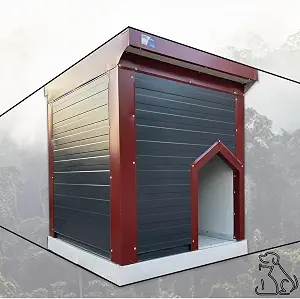
The SODEF insulated shelter is aimed at large breeds and combines insulation with outdoor weather protection.
Because insulated panels can be thick, confirm interior dimensions separately from the overall footprint.
3. PawHut 7′ × 5′ Walk-In Wood Dog House
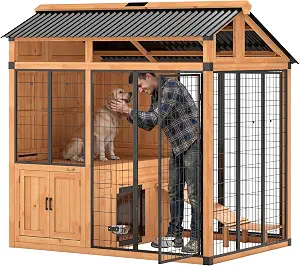
The PawHut walk-in dog house has a much larger footprint than a typical single-dog shelter. It suits buyers looking for room rather than portability.
Check roof seams, base support, and the exact sleeping area, especially if the structure will remain outside throughout the year.
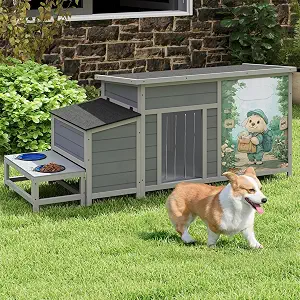
4. COZIWOW Large Wooden Insulated Dog House
The COZIWOW large dog house combines wood, insulation-oriented construction, an asphalt roof, and a feeding accessory.
It is a useful all-rounder to compare against both simpler wood shelters and fully plastic houses.
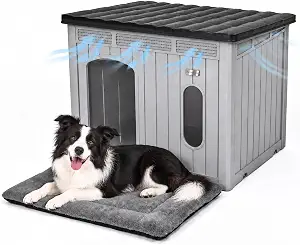
5. YITAHOME Large Indoor/Outdoor Dog House
The YITAHOME large dog house includes a door curtain and is listed for indoor or outdoor placement.
A curtain can reduce direct airflow through the doorway, but confirm how the rest of the structure manages ventilation and moisture.
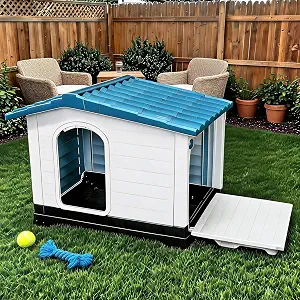
6. Elevated Plastic Dog House with Fold-Out Porch
The elevated plastic dog house uses a raised floor and porch layout. That can be useful on damp ground or hard surfaces where you want some separation between the floor and the surface below.
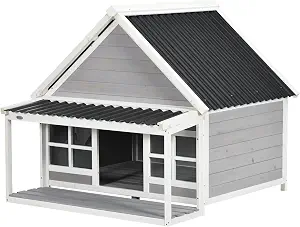
7. PawHut Wooden Dog House with Porch
The PawHut porch dog house has a traditional wooden look and tilt-roof design. A roof that opens or tilts can make routine cleaning easier if the hardware remains secure over time.
8. Weather-Resistant PP Plastic Dog House
The weather-resistant PP plastic dog house offers another low-maintenance alternative to wood.
Check the panel joints, ventilation, and floor rigidity, particularly for heavier dogs.
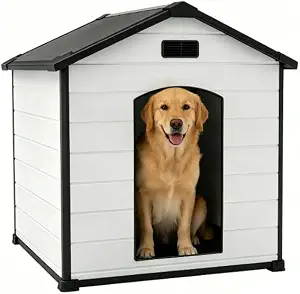
9. Wooden Outdoor Dog House with Warm Interior Liner
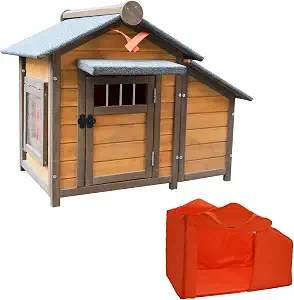
The wooden outdoor dog house with removable warm liner is aimed at smaller dogs and combines a felt roof with a seasonal interior liner.
It is useful to include because not every outdoor dog house needs to be XL. For small dogs, a correctly sized shelter can make more sense than buying a larger model “for extra room.”
Wood vs plastic outdoors
Wooden shelters often offer more style and can feel substantial, but finishes, joints, and roof materials need maintenance. Plastic and resin can be easier to clean and do not require the same surface treatment, though panel strength and ventilation deserve a close look.
If winter use is your main concern, compare the Insulated Dog Houses hub. For a broader overview, visit Dog Houses.
Doorways, flaps, and wind exposure
The entrance is often the largest opening in an outdoor dog house, so its size and direction matter. A very large doorway makes entry easy but may expose more of the interior to wind-driven rain. A smaller opening can feel more sheltered but still needs to allow comfortable access.
Door curtains or flaps can reduce direct airflow, but they are not insulation by themselves. Some dogs also need time to become comfortable pushing through a flap. If a product includes one, check whether it can be removed or secured open during training.
Assembly quality can affect weather protection
Even a well-designed product can leak or wobble if panels are not aligned correctly. During assembly, check that screws and fasteners are seated properly, the roof sits square, and floor panels do not leave unintended gaps. Recheck hardware after the first few weeks, especially on wooden houses that may expand or contract with moisture.
For larger structures, having a second person can help keep walls aligned while fastening the roof and base. Follow the manufacturer’s sequence rather than tightening everything immediately if the instructions recommend leaving some movement during alignment.
Outdoor shelters and multiple dogs
A large floor plan does not automatically mean a house is appropriate for two dogs. Shared sleeping depends on the dogs’ relationship, available space, doorway access, and whether each animal can rest without being trapped or crowded.
If a listing markets a double-room or multi-dog design, verify the interior layout rather than assuming any XL shelter can serve the same purpose.
What to do when the product arrives
Inspect panels, roof pieces, hardware, and the floor before assembly. Make sure nothing is cracked, warped, or missing. After assembly, press gently on the floor and walls to check stability before allowing the dog inside.
During the first rain, inspect the interior rather than assuming “waterproof” means no follow-up is needed. That early check can reveal a loose roof panel or assembly gap while the purchase is still within the merchant’s return window.
How to think about long-term value
A higher price may reflect size, insulation, heavier materials, or more complicated construction, but it does not automatically guarantee a longer useful life. A modest resin house kept in a protected location may be easier to maintain than a premium wooden structure left in standing water.
Include likely maintenance in the comparison. Wood may need attention to finishes and drying. Fabric liners need cleaning. Large kennels can be difficult to move. Resin can be easier to wash but should still be checked for cracks, warping, or loose joints.
Outdoor dog house comparison table
| Model | Format | Useful for | Check first |
|---|---|---|---|
| Garvee 54″ | Resin | Lower-maintenance outdoor use | Floor support and ventilation |
| SODEF insulated shelter | Insulated prefabricated | Large breeds and seasonal protection | Interior dimensions and insulation type |
| PawHut 7′ × 5′ | Wood, walk-in | Very large footprint | Assembly, base, roof protection |
| COZIWOW 59″ | Wood with insulation | Traditional shelter with winter features | Liner and cleaning access |
| Elevated plastic house | Plastic with porch | Raised floor and easy cleaning | Usable interior area |
Raised floors help, but they are not magic
A raised floor can separate the sleeping area from damp grass, soil, or a cold patio. It still needs to be stable, level, and strong enough for the dog. Check whether the manufacturer provides a weight recommendation and whether the space under the house can drain properly.
For heavier dogs, floor stiffness deserves extra attention. An elevated design that flexes every time the dog steps inside may be less comfortable than a lower structure with stronger support.
Roof design is one of the most practical differences
Sloped and asphalt-covered roofs are intended to shed water, while hinged or removable roofs can make cleaning easier. Look at where the water will actually go. Runoff directly in front of the doorway can create a muddy entrance even when the interior stays dry.
An opening roof should also fasten securely after cleaning. Convenience is less valuable if wind can lift a panel or expose a seam.
Ventilation matters in every season
Ventilation is not only a summer feature. A dog brings moisture into a shelter through breathing, wet paws, and damp bedding. Without airflow, condensation can develop even when the roof does not leak.
Make sure vents are not blocked by a wall, stored items, or deep bedding. Good ventilation should move moisture out without putting the dog directly in a draft.
Rain, snow, and direct sun test different features
Rain tests roof seams and drainage. Snow can block entrances or vents. Direct summer sun can turn a protected interior into an overheated space. Seasonal placement matters as much as product construction.
Use shade during hot months, keep snow and leaves away from vents, and inspect the area around the base after heavy rain. The American Veterinary Medical Association’s warm-weather pet safety guidance is also worth reviewing when an outdoor dog house will be used through summer.
Cleaning in real life
Imagine cleaning the house after a muddy week. Can you reach the back corners? Does the roof lift? Can the floor be removed? Are liners washable? A feature that simplifies regular cleaning can be more useful than a decorative extra.
How we selected these outdoor houses
We deliberately included different formats from the current ANIMOX catalog rather than choosing nine near-identical kennels. The selection includes wood, plastic, resin, insulation, raised floors, porches, and different size ranges.
We have not hands-on tested waterproofing, wind resistance, durability, or long-term floor strength.
FAQ: outdoor dog houses
Can a dog house stay outside all year?
That depends on its materials, construction, climate, maintenance, and manufacturer guidance.
Should the entrance face a certain direction?
When possible, orient it away from prevailing wind and direct rain.
Is a porch useful?
A porch can provide a shaded resting area and separate the doorway from wet ground, but it does not replace a dry interior.
Are plastic houses better in rain?
Plastic and resin do not absorb water like unfinished wood, but seams, vents, doors, and floor joints still determine performance.
A practical outdoor setup checklist
- Place the house on stable ground away from standing water.
- Keep the entrance out of the prevailing wind where possible.
- Provide shade during warm weather.
- Keep ventilation openings clear.
- Check the roof and floor regularly for moisture or damage.
- Confirm dimensions, materials, and return terms before ordering.
For wood-specific maintenance, see our wooden dog house guide. For dogs needing more space, compare large dog house options.