A chew-resistant dog house is designed to make some parts harder to damage. It is not a promise that every panel, doorway, floor or accessory will survive persistent chewing. Before buying, identify exactly what is reinforced and choose a shelter that also fits your dog and the weather.
Chew-resistant versus chew-proof dog houses
Manufacturers sometimes use these terms interchangeably. Treat an absolute claim as a question to investigate: which components are protected, what damage is excluded from the warranty, and are replacement parts available? ANIMOX has not carried out destructive tests on the examples below.
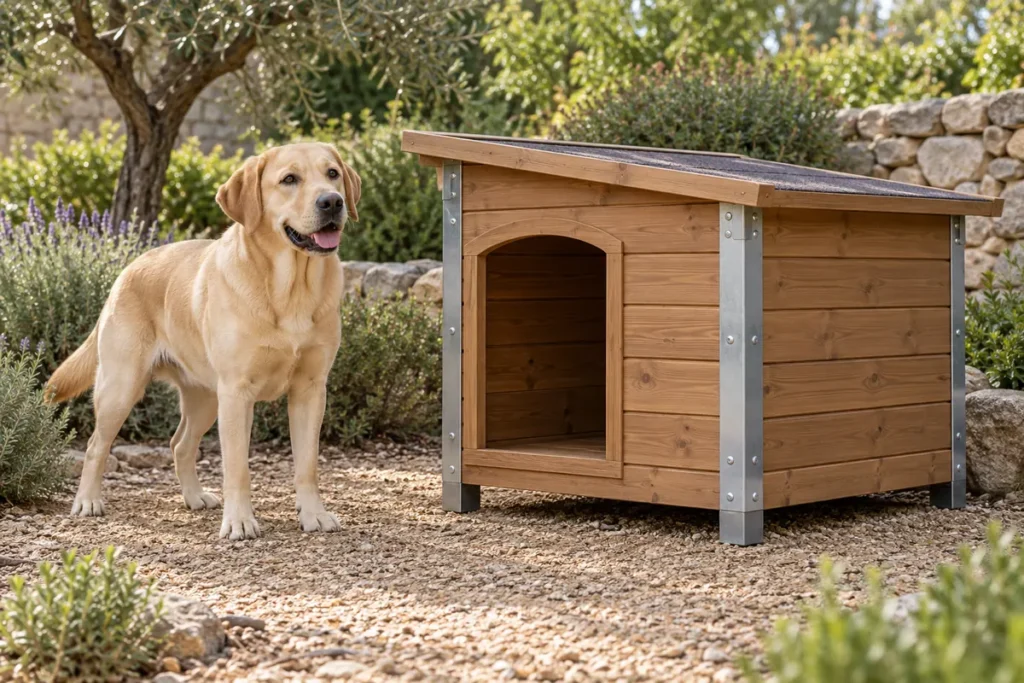
Look beyond the metal frame
A reinforced corner does not protect an exposed wooden door edge. Inspect the entrance, bottom edges, porch rails, hinges and panel joints. Check whether metal trim covers the surfaces your dog can actually reach. Avoid assuming a metal-framed house is entirely metal.
Ask for clear close-up photographs and an assembly manual. A decorative metal strip is not automatically a structural reinforcement. Verify fasteners, panel materials and maintenance instructions for the exact model.
Two manufacturer examples to investigate
Aivituvin AIR80/81/87 outdoor houses
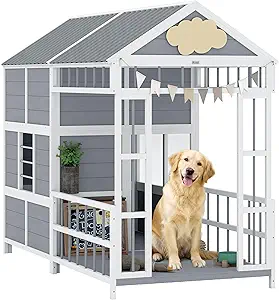
The manufacturer describes this range as having a metal frame intended to resist chewing. These are wooden houses with a porch; the frame claim does not establish that every wooden surface is protected. Confirm the selected model and its usable interior before ordering.
Coziwow 35-inch irregular aluminum dog house
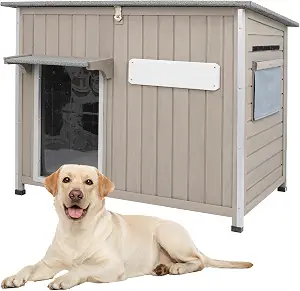
The manufacturer identifies WPC board, aluminum alloy and PVC panels and describes the house as chew-resistant. Its headline uses aluminum wording, but its materials list is mixed. This illustrates why reading the complete specification matters. No independent chew test is claimed here.
These are construction examples, not a ranked shortlist or proof of fit for every large dog. Current stock, shipping, warranty and exact model compatibility need checking with the seller.
Two ANIMOX catalog examples
Affiliate disclosure: ANIMOX may earn a commission from eligible purchases through merchant links, at no extra cost to you. The following are catalog examples, not independently tested chew-proof winners.
| Catalog variant | Listed overall size | What needs verification |
|---|---|---|
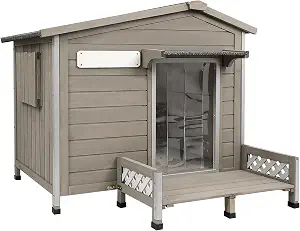
| Gowoodhut, product 1203 | 43.3 × 29.5 × 33.5 inches | Exposed wood, usable interior, warranty and exact trim coverage |
| Gowoodhut Gray, product 1251 | 34.6 × 25.6 × 28.2 inches | Usable interior and entry; large-dog wording is not proof of fit |
These measurements come from the stored catalog titles and describe overall dimensions. The larger exterior does not establish a larger protected sleeping area. Both titles describe an iron frame, removable floor and adjustable window; they do not document an independent chewing test.
View the 43.3-inch Gowoodhut catalog variant or view the Gray 34.6-inch Gowoodhut variant. Use those exact pages to follow the current merchant link. Ask for the model manual and chewing-damage warranty before treating either as a recommendation for a persistent chewer.
A practical inspection checklist
- List the exposed surfaces your dog could bite.
- Check the coverage of corner and entrance reinforcement.
- Request usable interior and entrance dimensions.
- Read the warranty for damage from chewing.
- Ask whether individual panels and trim can be replaced.
- Inspect assembled edges and fasteners before use.
- Check ventilation, drainage and access for cleaning separately.
The Dog Houses hub organizes the wider shelter choices; reinforcement is a separate criterion from insulation and weather protection.
Fit still matters
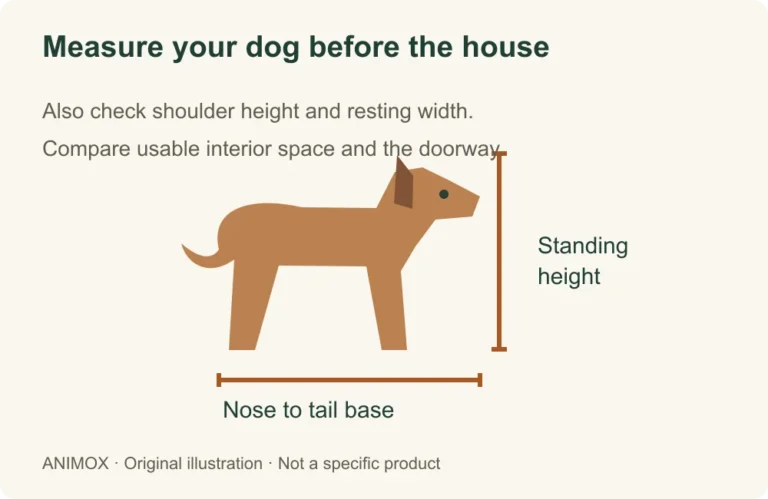
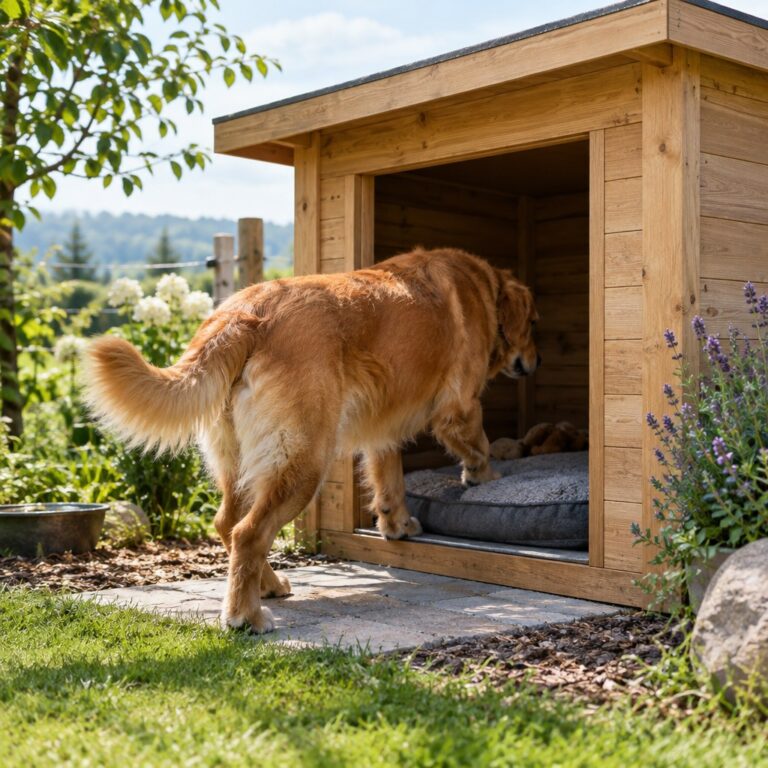
Measure your dog’s normal resting footprint and compare it with usable interior space. Overall dimensions may include a porch or roof overhang. A tough exterior cannot compensate for a cramped sleeping area or an entrance your dog struggles to use. Follow our dog house size guide and large-dog house comparison.
Weather protection is a separate check
Chew resistance does not establish insulation or suitability for extreme weather. Look at the roof, raised floor, ventilation and moisture management. For a separate discussion, read our rainy-weather guide and cold-weather limits.
Maintenance after chewing damage
Inspect the shelter regularly. If you find loose pieces, sharp edges or damaged attachments, prevent access to the damaged area and consult the manufacturer about repair or replacement. Do not cover a defect with an improvised attachment that introduces another accessible edge. A visibly damaged house needs assessment before continued use.
Frequently asked questions
Is a wooden dog house suitable for a dog that chews?
Evaluate the exposed wood and the actual reinforcement. A protected frame leaves other surfaces to check; the material name alone cannot establish suitability.
Is plastic automatically chew-proof?
No such conclusion follows from the word plastic. Verify the exact panel construction and seller’s claims rather than treating all plastic houses alike.
Should I buy the strongest-looking metal house?
Appearance cannot establish strength, usable space or comfort. Read the materials list, check edges and joints, and evaluate fit and weather conditions.
Will a tougher house stop destructive chewing?
Do not assume a furniture purchase will resolve the underlying behavior. Seek individual professional guidance for persistent destructive behavior, especially when the dog’s wellbeing is affected.
What should I ask before buying?
Ask which parts are reinforced, what remains exposed, which size is suitable, what chewing damage the warranty excludes, and which replacement parts are sold.
Before choosing a model
Editorial review: A dedicated illustration and two exact published catalog entries have been added. Manufacturer examples remain separate from those catalog variants. Exact reinforcement coverage, usable interior, replacement parts and chewing-damage warranty still require model-specific documentation before a confident recommendation. No hands-on testing, universal chew-proof guarantee or medical claim is made.