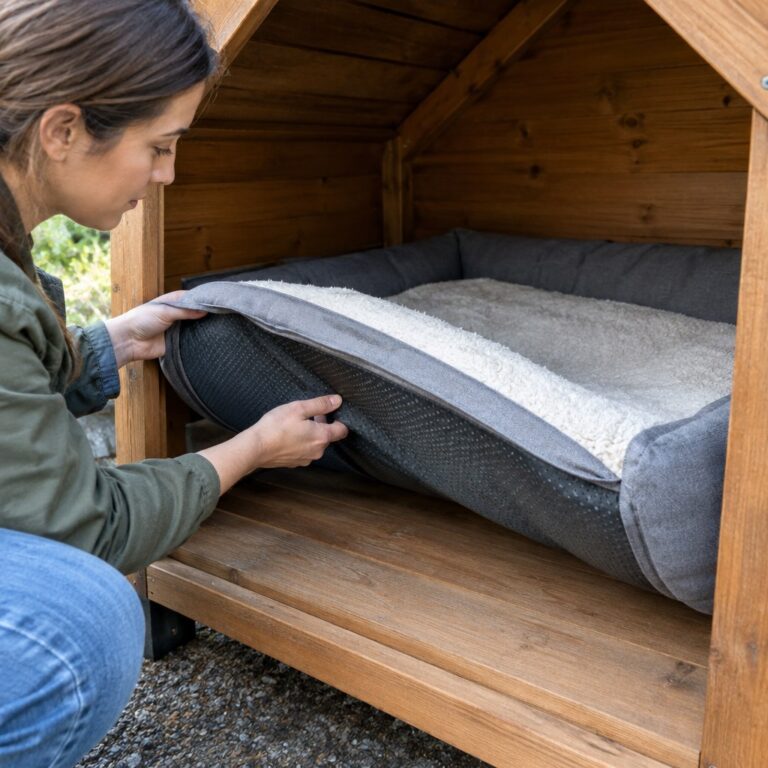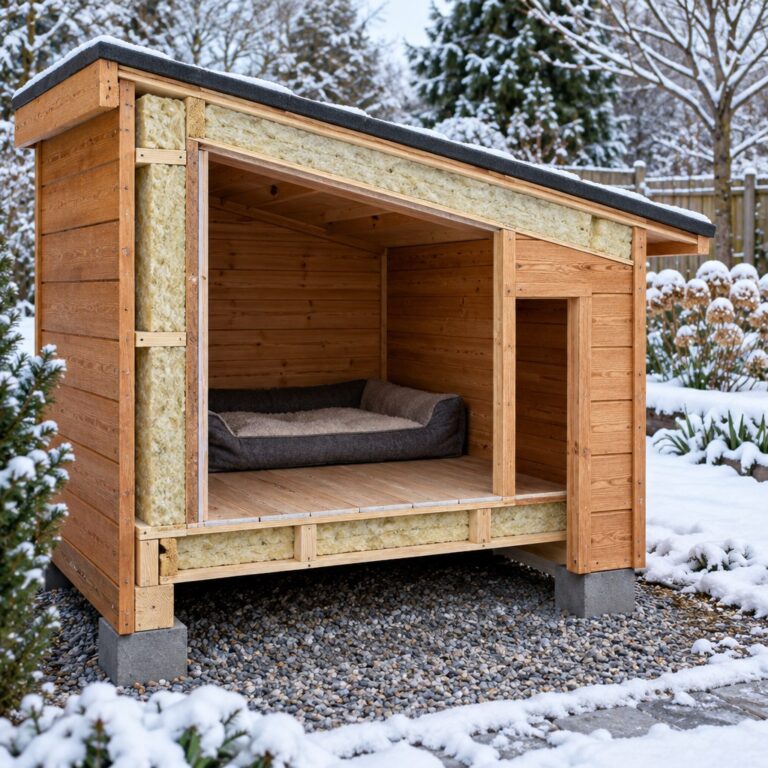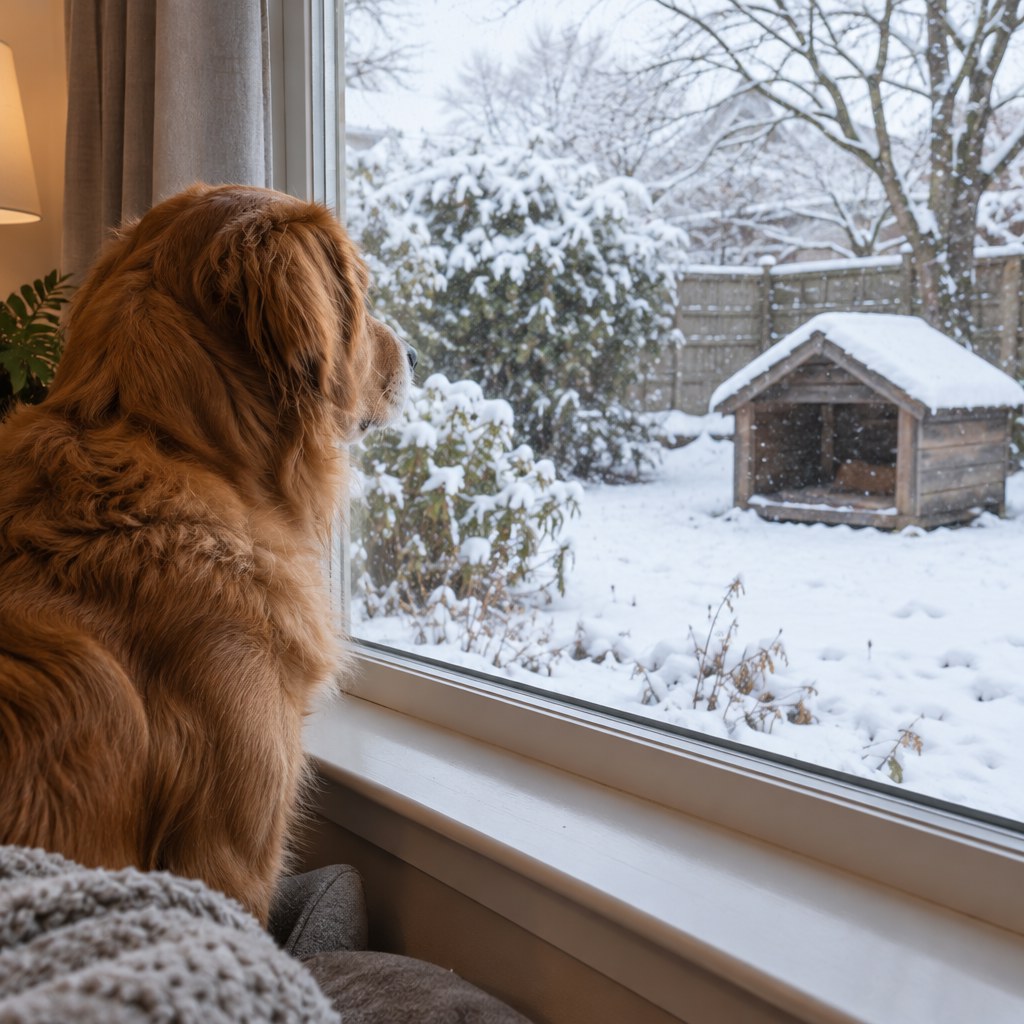
Illustrative shelter scene; not a photograph of an ANIMOX product test.
Disclosure: ANIMOX earns commissions from eligible purchases through product links on this site. This informational guide does not claim hands-on testing or veterinary review.
The weather app may show one temperature, but your dog experiences wind, wet ground, and the conditions inside its shelter. Age, coat, health, size, and time outdoors also matter. There is no universal cutoff that makes a dog house safe for every dog. A warm, dry indoor resting place should be ready before the weather deteriorates.
Why a temperature chart can mislead
A chart can draw attention to cold risk, but it cannot account for every dog or location. A dry, sheltered area and an exposed yard in freezing rain are not equivalent even when the weather app shows the same number. A dog that is wet may need a different decision from one with a dry coat.
Do not turn a breed stereotype into permission. Individual dogs vary, and being large or thick-coated is not proof that a dog can remain outside indefinitely. Ask your veterinarian about your own dog’s health and cold-weather needs rather than choosing an internet cutoff.
What the available guidance says
UConn Extension recommends limiting outdoor time below 32°F and keeping pets out of severe weather. That is a caution point, not a declaration that every temperature above it is safe or every exposure below it has the same risk.
Walk out to the shelter rather than judging it from the doorway. An entrance facing the wind, wet bedding after rain, or snow drifting across the threshold can make the resting spot very different from the forecast. Wall insulation does not address those separate exposure problems.
A house cannot replace an indoor fallback
A dog house may reduce exposure to wind and precipitation when appropriately built and placed. It does not control every environmental condition, and insulation alone does not produce heat. A heated pad must be used under its specific instructions, not as a reason to ignore dangerous weather.
Prepare the indoor resting place in advance. It should be dry, accessible, and calm, with water and a comfortable surface. Bringing a dog in before it is distressed is a better plan than waiting for an emergency and trying to assemble a new setup.
Signs that need immediate action
Shivering, weakness, unusual lethargy, confusion, or a dog that cannot move normally can be warning signs. Move the dog into an appropriate warm, dry place and contact a veterinarian promptly if you suspect a cold-related problem. Do not assume that a quiet dog is simply sleeping comfortably.
Tell the clinic how long the dog was out, the weather, whether it was wet, and what symptoms you saw. Follow professional advice rather than applying strong direct heat or improvising treatment. This article does not provide a home treatment protocol.
A winter decision checklist
Build outside time around a quick return indoors. Someone needs to be available to bring the dog in, water must remain usable, and the resting surface must stay dry. When rain, wind, or the dog’s behavior changes, shorten the outing instead of waiting for the thermometer to reach a chosen number.
For shelter construction, see how to choose an insulated dog house and the insulated house hub. For model comparisons, the winter insulated house guide explains available options without promising safe outdoor temperatures.
Common winter questions
Does a blanket make cold weather safe?
No. Bedding needs to stay dry and suit the resting area, and it does not cancel wind, wetness, or health concerns. A wet blanket can create a problem that extra layers will not fix.
Can I use the same cutoff for a puppy and an adult dog?
A senior dog’s needs depend on its health and mobility. Discuss individual cold-weather precautions with the veterinarian and make indoor access straightforward, especially when stepping over a threshold or walking across icy ground is difficult.
What if my dog wants to stay outside?
Preference is useful to observe, but it is not a complete safety assessment. Monitor conditions and behavior and retain responsibility for moving the dog to an appropriate environment.
Make the plan before the cold arrives
Make the decision before anyone is cold or distressed: identify the indoor resting spot, keep the route clear, and agree who is responsible for bringing the dog in. That plan is more useful than treating an insulated-house label as permission to extend an outing.