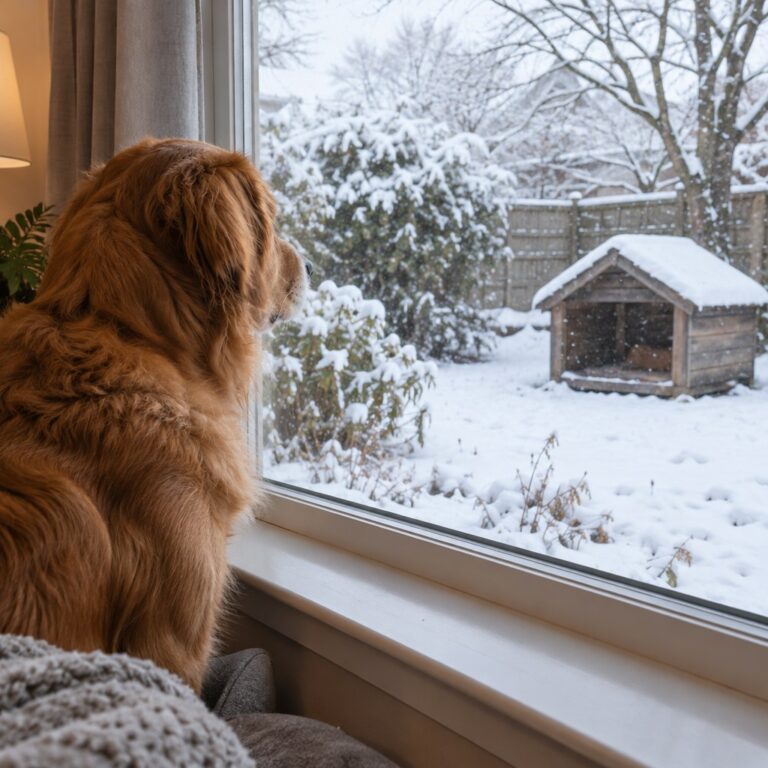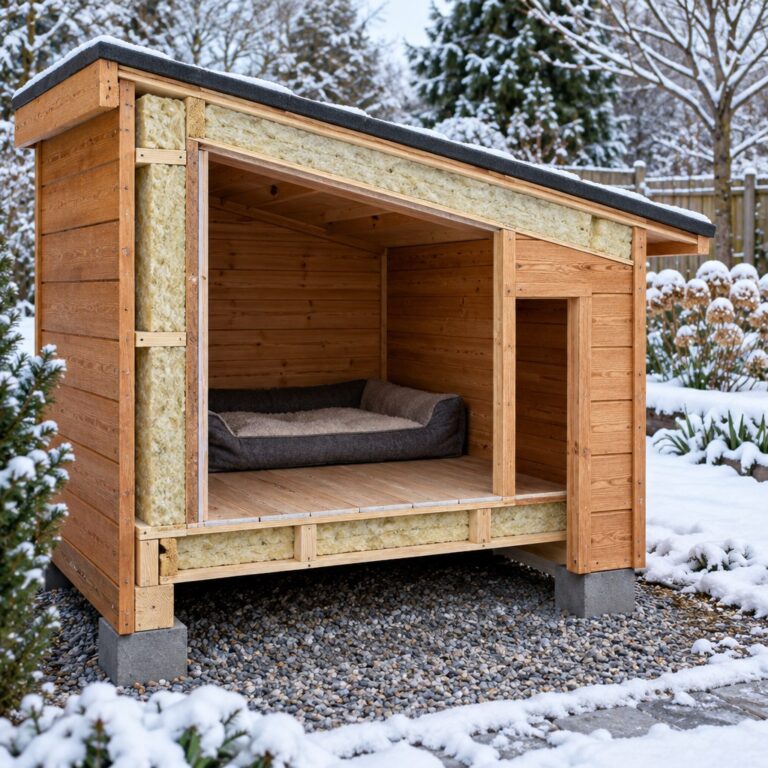
Illustrative shelter scene; not a photograph of an ANIMOX product test.
Disclosure: ANIMOX earns commissions from eligible purchases through product links on this site. This informational guide does not claim hands-on testing or veterinary review.
Winter bedding has a practical job: provide a dry resting surface that fits the shelter and can be replaced or cleaned when wet. The softest cushion is not always the easiest option to maintain outside. First find out where moisture enters and how you will reach the floor beneath the bedding.
Fix water entry before choosing bedding
Look for leaks, runoff, and moisture beneath the sleeping surface. If water enters the house, changing the bedding may only hide the problem. A roof joint or entrance exposed to rain needs attention before you put a new cushion on the floor.
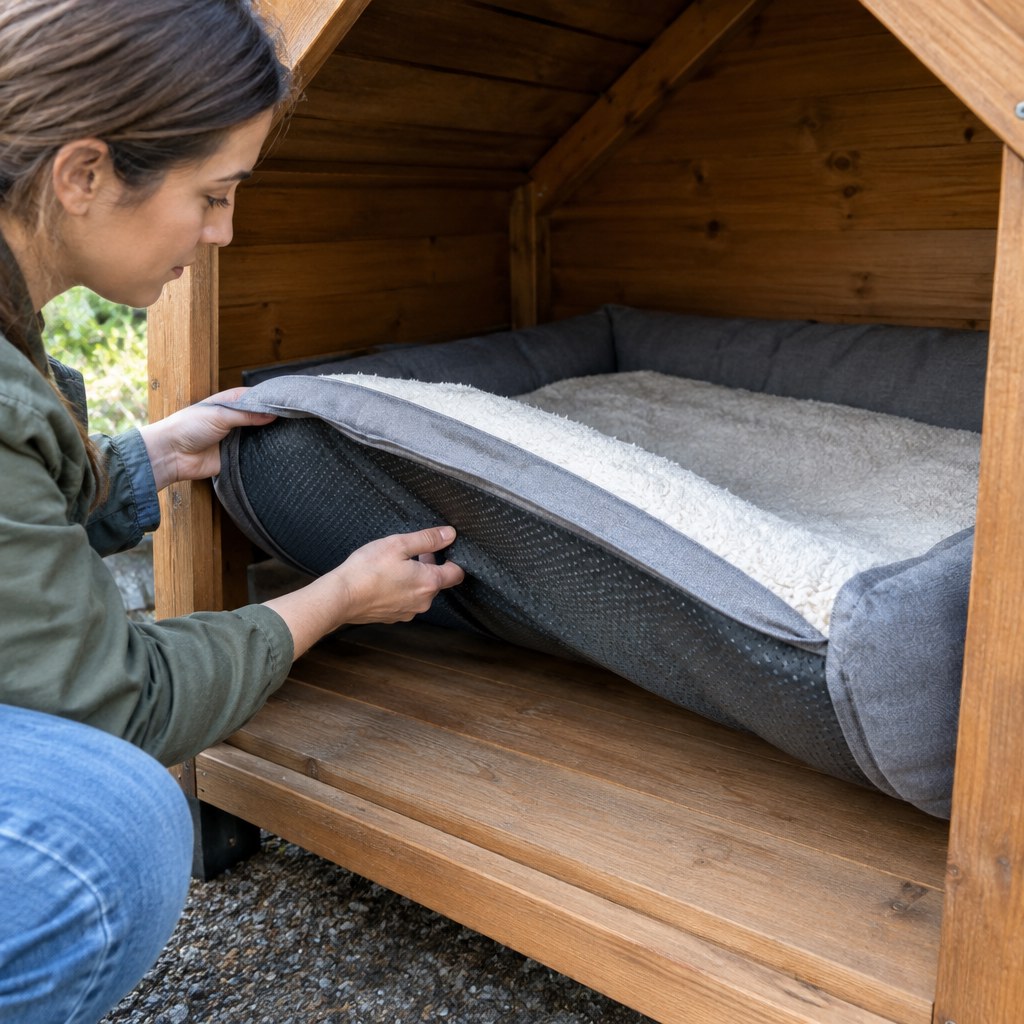
Lift the entire resting layer when it gets wet. The top may feel dry while the underside still holds moisture against the floor. An opening roof or removable base makes this task easier; with a narrow doorway, a bulky cushion can become difficult to extract and dry.
Fabric beds and blankets: convenient, with conditions
A removable washable cover can help in a dry sheltered space, but the insert may still absorb water. Read the instructions for the cover and filling separately. Waterproof language sometimes refers to an internal liner rather than the entire bed.
Blankets can be easy to swap, yet they can also bunch at an entrance or stay wet underneath. Keep replacements available if you use them. A single thick item that takes a long time to dry may be harder to maintain than a simple washable setup.
Loose bedding needs its own judgment
Straw, hay, shavings, and other loose materials differ in dust, source quality, moisture behavior, and how a dog interacts with them. A material used for livestock is not automatically suitable for a dog that chews or eats bedding. Discuss that choice with a veterinarian or welfare professional familiar with your climate and dog.
Avoid treated, fragranced, or unidentified material and do not use a product simply because someone uses it with another animal. A dog that eats bedding needs a different arrangement. This guide does not recommend one loose material universally or claim it provides a measured temperature benefit.
Heated pads are equipment, not ordinary bedding
A heated pad changes the bedding arrangement. Its instructions determine whether a cover or blanket is permitted, what surface it needs, and how the cord must be protected. Keep those requirements with the shelter’s care instructions so a well-meant extra blanket does not create an incompatible setup.
Do not use a heater to dry soaked bedding or assume a warm surface makes severe weather safe. A dog must have an appropriate resting choice and an indoor fallback. This is not an electrical installation guide.
Match the bedding to the dog
A calm adult that leaves bedding intact has different needs from a chewer or a dog that digs before settling. Inspect corners and seams after that behavior. Remove damaged items rather than leaving exposed filling accessible.
For a dog with limited mobility, leave a stable route through the entrance. Bedding that piles against the threshold can make the step higher, while a deep cushion may reduce headroom. Fit and access deserve attention alongside softness; a veterinarian can help with individual comfort needs.
A routine you can keep up
Tie inspection to events that introduce moisture: rain, snow, a muddy return, or a wet coat. Lift the bedding and examine the floor during normal care, then replace or dry the material as conditions require. A fixed weekly schedule can miss a soaked bed on the day it matters.
Keep the shelter easy to clean and avoid packing bedding against ventilation openings. Our insulated dog house guide helps compare structures; the wooden house guide covers a different material decision. For the category overview, use Insulated Dog Houses.
Questions about winter bedding
Can an orthopedic indoor bed be used outside?
Only if the exact product is suitable for that use and can be kept in the conditions required by its instructions. A washable cover alone does not establish outdoor suitability.
Is more bedding always warmer and better?
No. Extra material can reduce space, block access, hold moisture, or interfere with heating equipment. Judge the whole arrangement, not the depth alone.
The best choice is the maintainable one
Solve the leak or damp-floor problem before investing in a thicker bed. Once the shelter stays dry, pick bedding you can remove and maintain without a struggle. If you cannot keep that resting area suitable, an indoor setup is the more dependable choice.