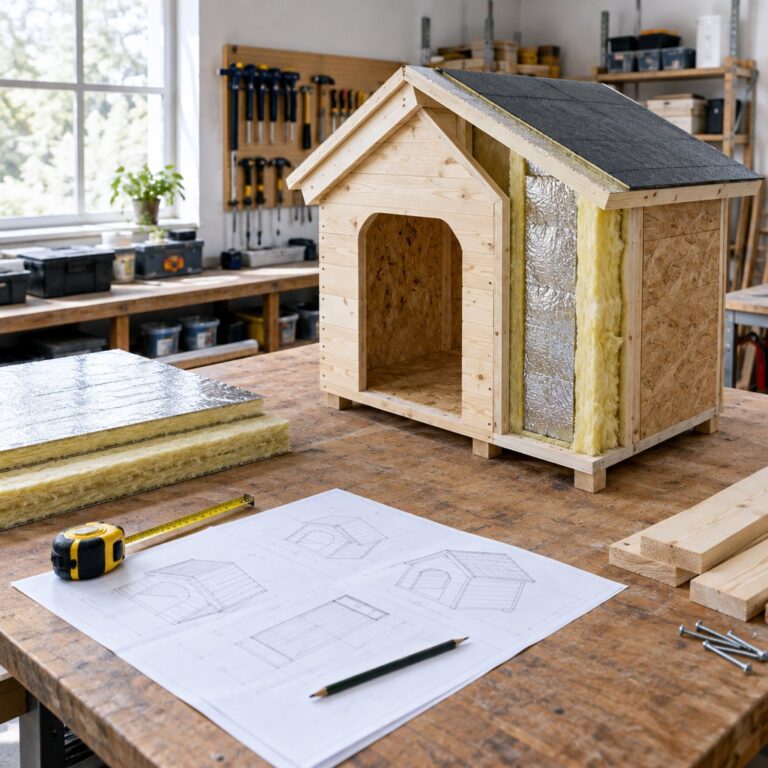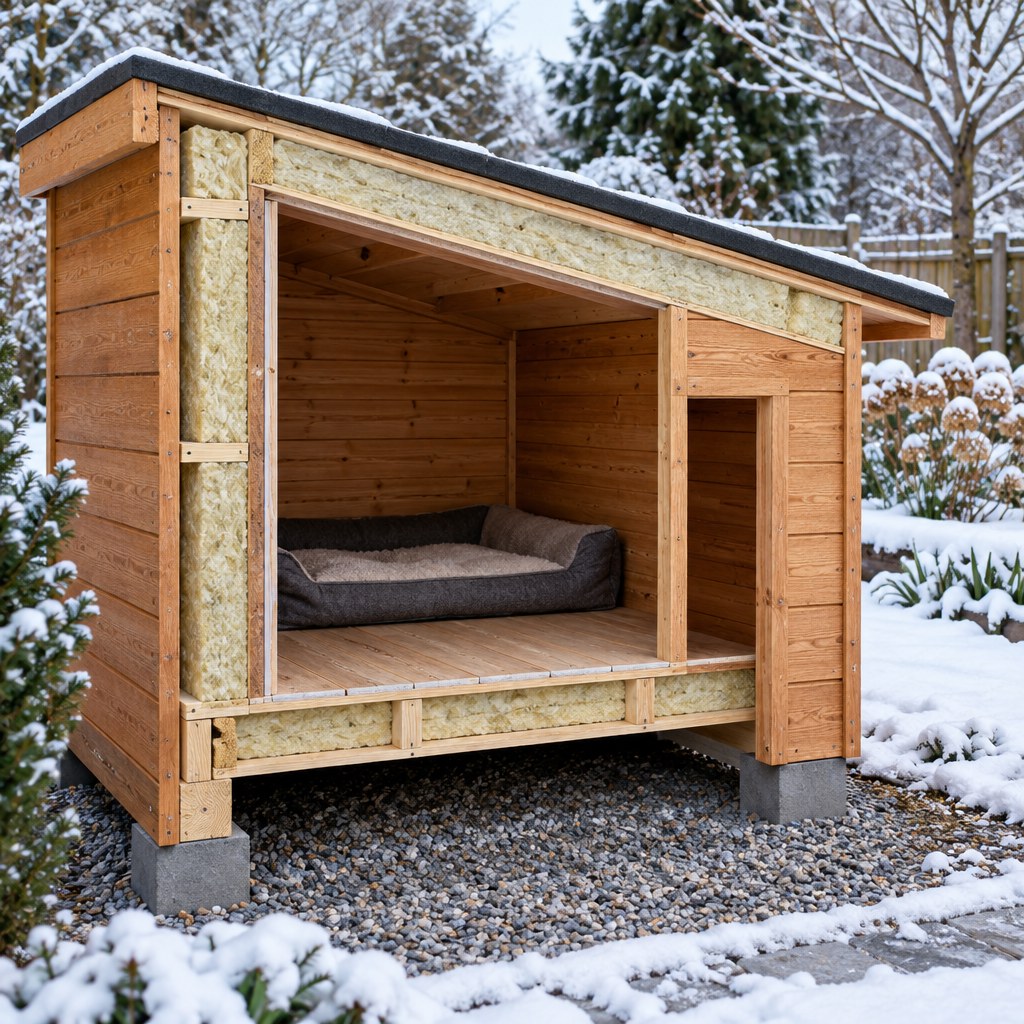
Illustrative shelter scene; not a photograph of an ANIMOX product test.
Disclosure: ANIMOX earns commissions from eligible purchases through product links on this site. This informational guide does not claim hands-on testing or veterinary review.
An insulated dog house can slow heat transfer through its shell. It does not make heat, and it does not turn an outdoor shelter into a temperature-controlled room. Its winter performance depends on the whole structure: a dry floor, intact roof, manageable drafts, and insulation where the product actually claims to provide it.
Separate insulation from heating
Think of insulation and heating as two separate purchases. Wall insulation limits heat transfer; a powered pad supplies heat at the surface where it is used. A house can have one, both, or neither. A description that mentions a thermal liner is not enough to establish that it includes heating equipment.
A removable fabric liner is also not the same thing as a specified layer of insulation within the walls. Ask what material is present, where it is used, and whether the floor and roof are treated as well as the walls. The word thermal alone does not answer those questions.
The doorway can undo a good wall design
An entrance facing wind can allow air exchange that insulation in the walls does not prevent. A curtain may help with drafts, but only if it fits, stays intact, and the dog will use it. Do not close or obstruct an entrance in a way that prevents easy exit.
Placement is part of the system. Choose a stable, dry location away from runoff and inspect it after weather changes. A roof overhang or porch can be useful, but neither proves that wind-driven rain stays out of the sleeping compartment.
Dryness is part of winter comfort
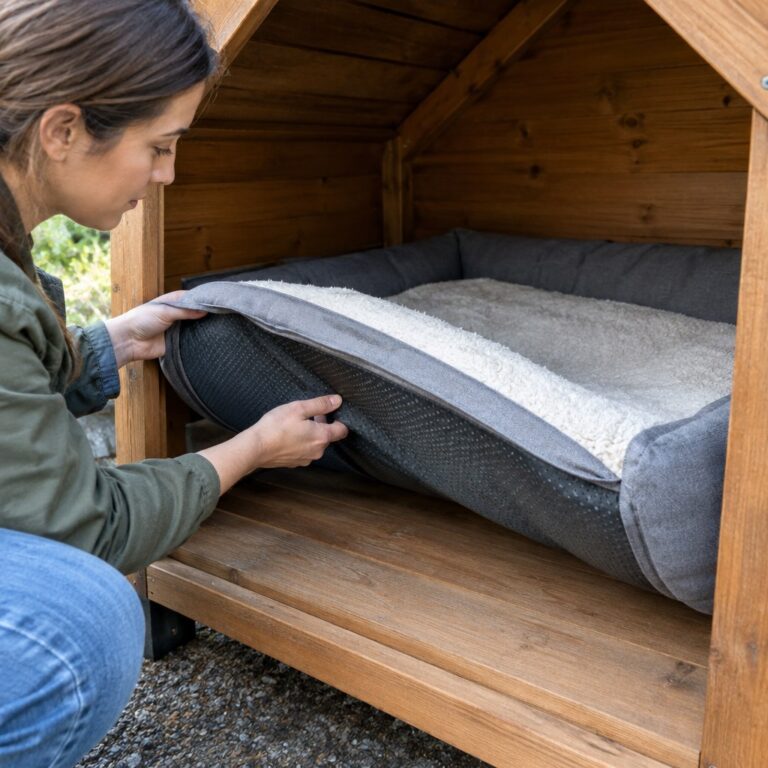
Look at bedding and the underside of the floor, not just the wall covering. Tracked-in moisture, leaks, and condensation can leave the resting area damp. A thick liner that stays wet is a maintenance problem, not a reliable improvement.
Make the shelter easy to open for inspection. Remove damp bedding and resolve its source before replacing it. Do not seal ventilation openings to make a house feel more insulated; trapped moisture can create a different problem.
What the catalog can and cannot prove
A seller may provide insulation material, liner coverage, or an assembly diagram. Those details help compare construction. They do not prove a specific temperature rise in your yard. We do not assign thermal ratings or claim a number of degrees warmer without evidence for the exact model.
For a commercial comparison, use our insulated dog house shortlist. For choosing a particular construction, the insulated house selection guide goes through size and weather protection. This article explains the limits of insulation rather than repeating their product rankings.
A useful inspection routine
A practical inspection starts at the sleeping area. Lift the bedding, feel for moisture below it, and look along panel joints for daylight or damaged seals. If you use a thermometer, place it near the resting area rather than against a sun-warmed exterior wall. A reading helps describe conditions; it cannot establish that those conditions suit your individual dog.
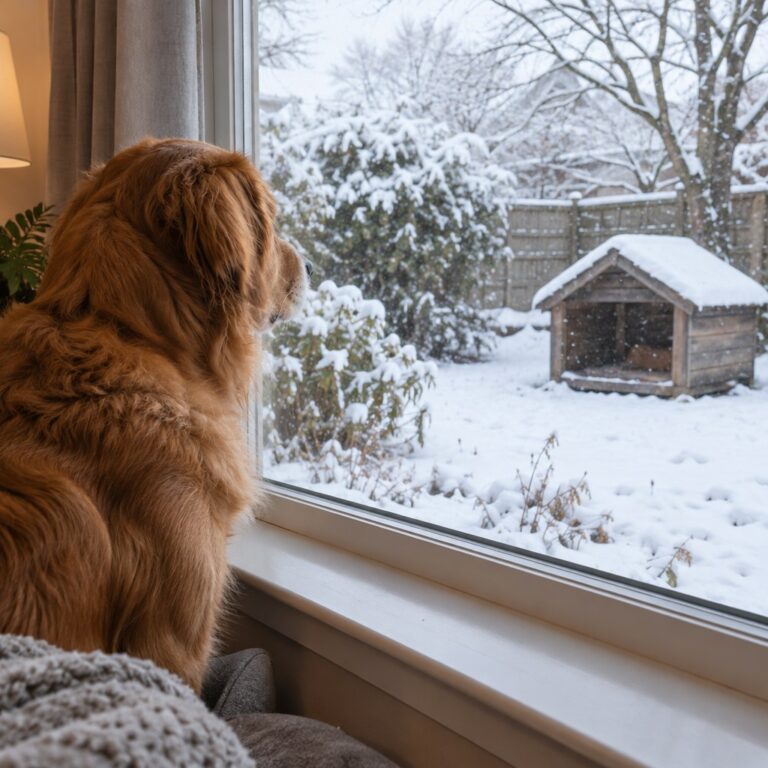
A thermometer is information, not permission to leave the dog outside. Age, health, wetness, coat, wind, and duration all affect the decision. UConn’s cold-weather guidance advises limiting exposure during cold conditions and avoiding severe weather.
Frequently asked questions
Is an insulated house enough without a heater?
There is no universal answer. Mild conditions and severe cold are different situations, and no product description establishes the needs of your individual dog. Use an appropriate indoor fallback.
Should I add more insulation to every house?
Only with a design that keeps added material protected, leaves ventilation open, and preserves sleeping space. Loose foam within reach of teeth creates a different problem from inadequate insulation. Ask the manufacturer about compatible liners or panels before altering the shell.
The practical decision
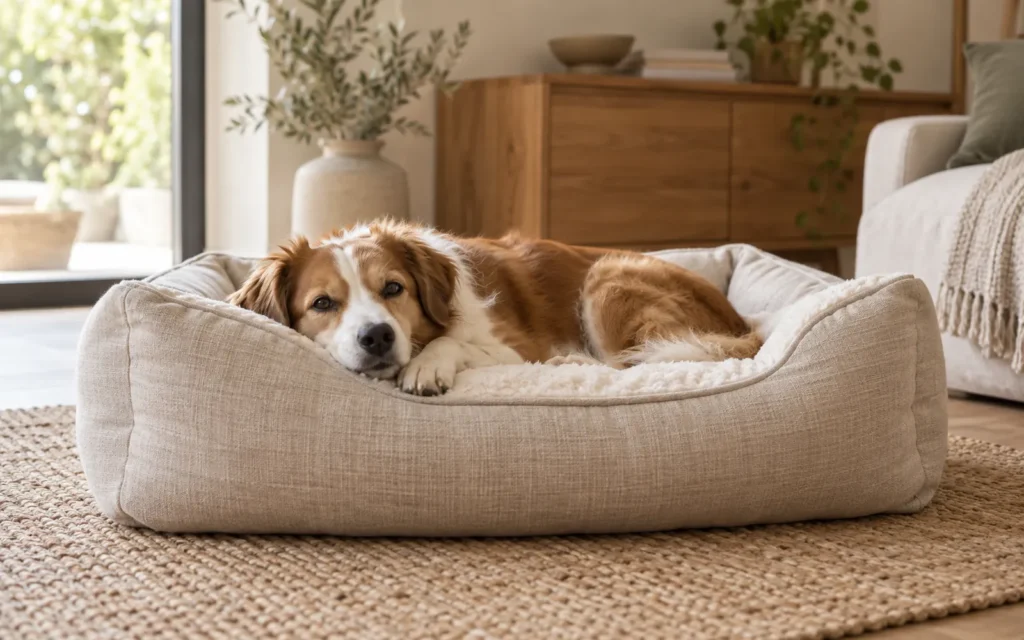
Compare the whole shelter and your ability to keep it dry. If the environment cannot be made suitable, choose indoor shelter instead of adding another product and assuming the problem is solved. The Insulated Dog Houses hub is the relevant starting point for models, but it is not a guarantee of winter safety.