A dog snow suit adds leg sections or broader body coverage compared with a simple vest. That can also add more openings, fasteners and places where fit matters. Start with the activity and conditions; do not assume maximum coverage is automatically the easiest or most comfortable option.
Measure for the actual pattern
Use the exact maker’s chart. Record requested chest, back, neck and leg measurements instead of borrowing a coat size from another product. Check the dog standing and moving. A suit can fit around the chest but still restrict shoulder movement or pull at the back.
Test toilet clearance before an outing
Look at the belly opening and rear cut. Verify the intended configuration for the dog’s body shape and normal posture. Easy cleaning cannot compensate for a suit that becomes soiled at every toilet break. Test the routine in a controlled setting before using it away from home.
Separate cuffs, feet and boots
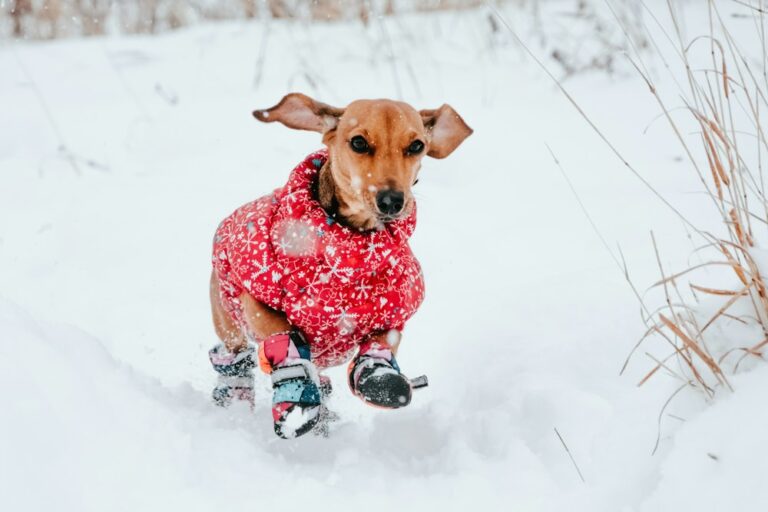
A leg cuff is not a boot. A suit described as full body may still leave paws uncovered. Check exactly what is included, whether cuffs collect snow and how any separate footwear fits. Do not treat a photo of covered legs as proof of integrated foot protection.
Read the shell and lining information
Check material, stated weather protection, closure construction and care. We have not verified a warmth comparison that identifies the warmest dog snowsuit. Avoid a temperature promise based solely on padded appearance.
Build up from simpler clothing
If the dog is unfamiliar with garments, introduce a simple coat first, then progress gradually. Keep early sessions short and reward relaxed behavior. Inspect movement rather than considering a stationary dog proof of acceptance. Remove equipment that causes distress or restriction.
Practical maintenance matters
Multiple leg sections can take longer to put on and dry. Plan how the suit is cleaned after slush or muddy snow, where it can dry and whether fasteners remain accessible. Compare the whole routine with a simpler coat-and-footwear arrangement.
Compare designs without assuming a winner
Make a short list of the features your routine needs: leg coverage, toilet clearance, harness access, manageable fasteners and a realistic drying routine. Compare exact model specifications rather than brand names. This is an informational buying guide, not a tested ranking or a recommendation for a particular snowsuit.
Frequently asked questions
What is the warmest dog snowsuit?
We have no verified comparative test establishing a winner. Ask for documented construction and assess exact fit.
Is a suit with legs better than a coat?
It provides a different coverage pattern and a more involved fit. Choose for the actual conditions, movement and care routine.
Does full body mean it includes feet?
Not necessarily. Read the component list and images for the selected variant.
Should a snowsuit have a hood?
A hood is a design choice, not proof of warmth or safety. Check the dog’s movement, vision and comfort.
Can a large dog wear one?
Size labels do not establish fit. Verify measurements for the exact model and observe movement.
Will a snowsuit make extreme cold safe?
No such guarantee is made. Equipment does not replace appropriate shelter and an individual exposure plan.
Plan the rest of your winter gear
Start with the winter dog equipment guide, then review the winter boot fit guide if separate paw protection is needed.
Sources and related ANIMOX guides
Further reading from the American Kennel Club. These sources inform specific checks; they do not establish ANIMOX hands-on testing.
Draft editorial status: Final source, sizing and link review, a dedicated relevant image required before publication. No exact snowsuit product, sizing chart or affiliate mapping verified in the ANIMOX catalog. No veterinary review, hands-on testing or guaranteed warmth is claimed.