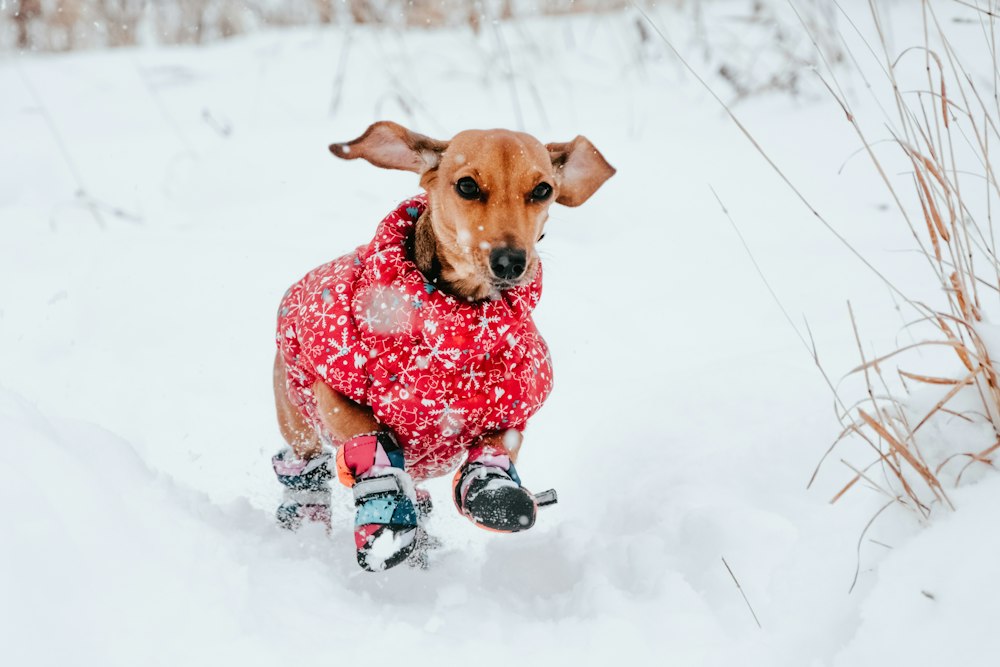
Dog boots for winter should match the route: treated pavement, compacted snow and a muddy path raise different questions. Make a note of where protection is needed. A boot chosen for hot pavement or a summer trail should not be assumed to provide winter insulation.
Measure each paw for the exact model
Follow the boot maker’s measurement method and record each foot separately. Compare the widest loaded paw measurement where the chart asks for it; do not size by the dog’s overall weight alone. Front and rear feet may require different sizes. Check whether the package contains two boots or four.
Retention depends on the whole fit
A secure closure cannot rescue the wrong sole size. Check whether the boot rotates, folds under the paw or slips during a short walk. Review the maker’s recheck instructions. Do not solve slipping by overtightening or wrapping an improvised band around the leg.
Separate traction from a no-slip promise
Compare the sole, flexibility and intended surfaces. A visible tread is a design feature, not proof that a dog cannot slide on ice. Keep the route manageable and shorten the outing when the footing is poor.
Watch what happens to moisture
Ask about the shell and opening as well as the sole. Snow can enter above a short boot. Check inside after an initial outing and remove wet footwear promptly. Dry boots thoroughly according to their care instructions; a damp lining should not become the next walk’s starting point.
Introduce them gradually
Start indoors with short sessions and rewards for comfortable movement. Pause if the dog is distressed or cannot walk normally. The aim is familiarity, not forcing a long first walk. Recheck paws and fit after the first short outdoor trial.
Compare specifications before choosing a boot
Write down the intended surface, the maker’s sizing method, fastening system, moisture protection and care instructions for each candidate. Leave missing specifications blank and ask the manufacturer rather than estimating from photographs. This guide explains the selection process; it does not rank or endorse particular models.
Make the after-walk check routine
Look for debris, trapped moisture, rubbing and damaged closures. Persistent limping, pain or a damaged paw needs veterinary advice. Footwear is not a diagnosis, bandage prescription or substitute for professional care.
Frequently asked questions
Should dogs wear boots in snow or winter?
Consider the route and the individual dog. They can be useful for some surfaces, but fit and tolerance must be assessed rather than assuming every dog needs them.
Are there boots that actually stay on?
Retention depends on correct size, fastening and movement. No model is guaranteed here; check short supervised use before relying on it.
What are the best boots or shoes for winter walks?
Choose for the actual conditions and verified fit. This guide has no tested product ranking.
Do vets recommend dog boots or shoes?
Advice depends on the dog’s condition and intended use. General guidance does not certify a particular boot.
What can I use instead of dog booties?
Discuss suitable alternatives for your route and dog. Changing the route and cleaning paws can be relevant, but neither is claimed to provide the same coverage as a fitted boot.
Can I use ordinary boots on an injured paw?
Ask your veterinarian first. Injury care can require a specific dressing or restriction; a retail boot is not automatically suitable.
Are waterproof boots always insulated?
No. Waterproofing and insulation answer different questions. Confirm both where needed.
More Winter Dog Care guides
Sources and related ANIMOX guides
American Kennel Club: boot selection and introduction; Ruffwear: an example of a manufacturer paw-measurement chart. The latter illustrates a model-specific sizing method, not a winter-boot endorsement or an ANIMOX test. Always follow the chart for the model you choose.
Editorial scope: This is an informational selection and fit guide, not a product ranking. The illustrative photograph does not identify or endorse a boot model. No veterinary review, hands-on testing, individual fit assessment or guaranteed warmth is claimed.