On this page
The best waterproof outdoor dog house for rainy weather is not simply the one with waterproof in its name. A dry sleeping area depends on the roof, seams, doorway, floor clearance, ground drainage, and how you place the shelter. No catalog label proves that a house can stay dry through every storm or stand in floodwater.
Affiliate disclosure: ANIMOX may earn a commission if you buy through eligible merchant links, at no additional cost to you. Product links below lead to ANIMOX pages. We have not physically tested these products, and this article does not promise current stock, prices, or medical results.
This shortlist uses products published on ANIMOX and compares the rain-related features described in their listings. We have not performed water-ingress tests. The emphasis is keeping ordinary rain and ground moisture out, rather than choosing the warmest winter house or the largest shelter. For a broader comparison, see our outdoor dog house guide.
Rain-focused comparison at a glance
| Model | Rain-related features in listing | Main check before buying |
|---|---|---|
| SLEKVERSA Large Blue | Raised floor, eaves and drainage grooves; two doors | Door sealing and usable interior |
| Ferplast Dog Villa Small | Plastic shell and fold-out porch | Small-dog fit and side-panel closure |
| COZIWOW 59-inch wooden house | Asphalt roof; marketed as weatherproof | Roof joints, floor clearance and wood care |
| AIVITUVIN heated house | Waterproof roof, raised base and porch | Dry electrical setup and exact pad instructions |
1. SLEKVERSA elevated plastic house — Large Blue
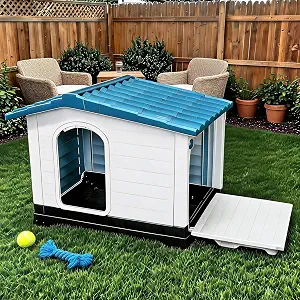
SLEKVERSA Large Blue elevated house combines a raised floor with wide eaves and drainage grooves according to its stored description. The listing gives an interior of 38 × 26 × 31 inches. Treat that as seller information to confirm, not a measurement made by ANIMOX. It is useful for comparing the actual resting space against your dog, rather than relying on the advertised weight capacity.
The side door opens into a porch. That adds access, but an open panel can admit wind-driven rain. Decide whether the porch will be closed during wet weather and inspect the fit of both doors. A plastic shell is not a promise that its assembly seams are watertight. Ask how the base drains and whether the feet can be leveled on your intended surface.
2. Ferplast Dog Villa — Small version
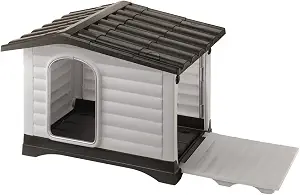
Ferplast Dog Villa for small breeds is the small model listed at approximately 28.75 × 23.23 × 20.87 inches overall. The description identifies a plastic body and a fold-out side porch. Those overall measurements are not the internal sleeping dimensions. This version should not be substituted for a larger Dog Villa when comparing fit.
Its fold-out panel makes cleaning and access part of the decision. In rainy weather, check that the closed panel and entrance provide the protection your location needs. The manufacturer’s waterproof-material description does not establish whole-house resistance to sideways rain. This is a small-dog option; skip it if your dog cannot stand, turn, and lie down naturally inside.
3. COZIWOW 59-inch wooden house with asphalt roof
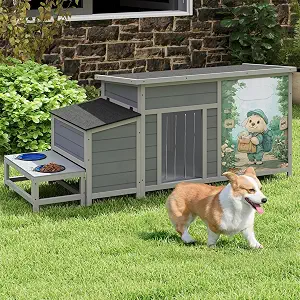
COZIWOW 59-inch insulated wooden house is listed with an asphalt roof and a weatherproof-shelter description. The 59-inch label should not be read as the usable floor length unless confirmed. An asphalt covering is relevant to shedding rain, but roof overlaps, fasteners, and the junction with the walls still need attention.
Wood requires a different inspection routine from plastic. Check care instructions for protective finishes, look for raised or cracked edges, and keep vegetation away from the walls. Ask for the floor clearance and interior dimensions before purchase. Insulation can help with a separate cold-weather problem, but a liner does not repair a roof leak and should not be left wet.
4. AIVITUVIN heated outdoor house with raised base
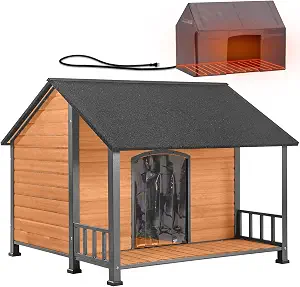
AIVITUVIN heated outdoor dog house lists a waterproof roof, insulated liner, heated pad, raised base, and porch for medium to large dogs. It is worth comparing when cool rain is part of the climate, but it brings electrical-care requirements that a simple unheated house does not.
Use the pad only under its own instructions. Check whether the shelter keeps connectors and the sleeping area dry, how the cord is routed, and what outdoor power protection is required. Do not assume that a weatherproof roof makes every electrical component waterproof. If the electrical setup cannot meet the manufacturer’s requirements, choose an unheated arrangement instead. Our heated dog house guide covers that separate buying decision.
What waterproof should mean in your buying checklist
Roof coverage and assembly seams
Look for a sloping roof, overhangs, and an explanation of how roof panels meet. Rain sheds from a surface only if it has somewhere to go. Check assembly instructions before sealing anything yourself; an unsuitable sealant can interfere with ventilation, materials, or maintenance. Ask the seller which joints require attention and whether the roof opens for cleaning.
Door exposure and ventilation
A roof does not stop wind-driven water entering a doorway. Place the entrance away from prevailing rain where practical, without blocking the dog’s access. A curtain may reduce drafts but can be unsuitable for a dog that will not use it. Keep ventilation open: trying to seal every opening can create a damp, uncomfortable interior.
Raised floor and ground drainage
Floor elevation helps separate bedding from damp ground, but it cannot prevent flooding. Avoid low spots, runoff routes, and areas beneath overflowing gutters. Choose a stable, level base that drains away from the house. Do not balance the shelter on loose blocks or create a tip hazard. Check any anchoring instructions for exposed locations.
A rainy-weather setup and inspection routine
Before your dog uses the assembled house, inspect it after an ordinary rain while it is unoccupied. Look at the roof joints, wall corners, entrance, underside, and bedding. This is a practical household check, not a certification test. If water is getting in, resolve the cause or use a different safe resting area; do not rely on extra bedding to soak it up.
- Remove wet bedding and let the interior dry.
- Clear debris that traps water around the feet.
- Check hinges, latches, fasteners, and roof edges after wind.
- Inspect liners for dampness and follow cleaning directions.
- Bring your dog into suitable indoor shelter during severe weather rather than trusting a product label.
For fit, use the Large Dog Houses hub when applicable. For cold-weather construction, compare the Insulated Dog Houses hub. Those guides address different needs from this rain-focused shortlist.
Frequently asked questions
Is a weatherproof dog house completely waterproof?
Not necessarily. Weatherproof is often a broad marketing description. Ask about the assembled roof, doorway, seams, and floor; do not assume the word provides a tested water-ingress rating.
Is plastic better than wood in a rainy climate?
Either can be appropriate. Plastic may simplify wiping and avoid wood-finish maintenance; wood designs may offer useful roof coverage and serviceable panels. The exact construction and placement matter more than material alone.
Can I put a dog house directly on wet grass?
Check the instructions and ground drainage first. Saturated or uneven ground can undermine a stable base and keep the underside damp. A well-drained, supported location is preferable to a low spot that collects water.
Should I add a heater to dry wet bedding?
No. Remove wet bedding and address the leak or moisture source. Only use approved heating equipment as directed in a dry, suitable setup; a heater is not a leak repair.
How to choose from this shortlist
Start with your dog’s usable space, then compare rain entry points and the care routine you can maintain. Do not buy a small house for its roof or a large house merely for its exterior length. The Outdoor Dog Houses hub provides the relevant category overview, while our wooden dog house guide offers a material-focused comparison.