On this page
Do dog cooling mats really work? Yes, within limits. A good cooling mat can make a resting surface feel cooler than the surrounding floor or bed for a period of time, giving a warm dog a more comfortable place to lie down. How well and how long it works depends on room temperature, the mat’s material, airflow, and how your dog actually uses it. Cooling mats are comfort aids. They are not treatments for overheating and cannot replace shade, water, and a cool environment.
This guide explains the basic physics behind cooling mats, compares the main types, covers what affects how long they stay cool, and outlines when they fall short. It also covers care, safety, and the heatstroke warning signs every dog owner should know.
How Do Dog Cooling Mats Work?
Dogs release heat mainly by panting, with a small contribution from the sweat glands in their paw pads. They also lose heat by lying on surfaces cooler than their bodies. That last route is called conduction, and it is one mechanism used by contact cooling mats. Heat naturally moves from a warmer object to a cooler one. When a dog lies on a surface cooler than its belly and chest, where fur is often thinner, some body heat flows into that surface.
The challenge is that the surface keeps absorbing heat and gradually warms up. Once the mat reaches roughly the same temperature as the dog’s skin, it stops pulling heat away. Each mat type handles this problem differently.
Pressure-activated gel mats
These mats contain a gel that manufacturers often describe as pressure-activated. They need no electricity, refrigeration, or water. The gel absorbs body heat when the dog lies down and releases it back into the room when the dog gets up. Because the gel can only hold so much heat, these mats tend to feel coolest at the start of a rest and less cool as the session goes on.
Water-filled mats
Water-filled mats rely on water’s thermal mass, meaning water can absorb a fair amount of heat before its temperature rises noticeably. The cooling effect is still limited by the starting water temperature and the room temperature. Like gel mats, they also need puncture-resistant construction.
Refrigerated or freezable pads
These use an insert that you chill in a refrigerator or freezer before use. They can start out noticeably cold, but they warm steadily once removed. Follow the manufacturer’s directions about chilling, and do not place an overly cold insert directly against a dog without the cover the product is designed to use.
Elevated cot-style beds
Elevated beds are not mats in the strict sense, but they are often compared with them. They raise the dog off a hot floor and let air circulate underneath. They do not actively absorb heat, but airflow can make resting more comfortable.
None of these designs can continuously remove heat from a hot, unventilated space. A mat moves heat; it does not make it disappear. If the room itself is hot, the mat has nowhere to send that heat.
Cooling Mat Types Compared
Use this table to match a mat type to your home and your dog’s habits.
How Long Do Dog Cooling Mats Stay Cool?
There is no universal duration. Any figure printed on packaging reflects the manufacturer’s conditions, not necessarily your living room in July. The mat warms as it absorbs heat and must release that heat before it can feel cool again. Several factors shape that cycle:
- Room temperature: The warmer the room, the less heat the mat can shed between uses and the faster it warms under your dog.
- Dog size and coat: Contact area, coat, position, and the individual dog affect how quickly the surface warms.
- Continuous use: A dog that lies on the mat for long stretches will warm it more than a dog that hops on and off.
- Airflow: A fan or good ventilation helps the mat release stored heat.
- Placement: A mat on a sunny floor or near a heat source starts warm and stays warm.
A practical comfort check is simple: follow the manufacturer’s instructions and touch the surface with your hand. If it no longer feels cooler than the floor, it needs time to recover, or it needs re-chilling if it is a refrigerated type.
Which Dogs Benefit Most?
Dogs that already seek out cool tile, stone, or bathroom floors on warm days often appreciate a mat, especially when they can freely move between surfaces. Being able to choose is important: dogs regulate their own comfort by shifting position, and a mat should be one option, not the only one.
Cool-floor seekers
Dogs that already sprawl on tile tend to accept a mat quickly because it feels familiar.
Senior dogs
A low-profile mat is easy to step onto, but comfort and traction matter. Thin mats may need extra padding underneath.
Thick-coated breeds
Dogs with dense coats may welcome an extra cool surface indoors, alongside air conditioning and water.
Flat-faced (brachycephalic) breeds and dogs with heart, breathing, or weight concerns are more vulnerable in heat. A mat can add comfort, but these dogs need especially careful heat management. Ask your veterinarian about a hot-weather plan.
When Cooling Mats Don’t Work Well
A mat in direct sunlight, a hot car, or an overheated room cannot provide reliable heat protection. In these situations the mat absorbs heat from its surroundings as well as from the dog, and it quickly loses any cooling effect. Common situations where mats disappoint include:
- Outdoor use in full sun: Sunlight heats the mat surface directly.
- Vehicles: A parked car can become dangerously hot. No mat makes leaving a dog in a car safe.
- Rooms without ventilation or air conditioning: The mat has nowhere to release stored heat.
- Dogs that dislike the texture: Some dogs avoid crinkly or slick surfaces, so the mat sits unused.
- Undersized mats: If only half the dog fits, contact and comfort are reduced.
During extreme heat, rely on the fundamentals: shade, fresh drinking water, ventilation, indoor cooling, and limiting exercise to cooler parts of the day.
How to Choose and Use a Cooling Mat
What to look for
- Correct size: Your dog should be able to stretch out fully with its whole body on the surface.
- Washable, non-slip cover: A removable cover simplifies cleaning, and a grippy base keeps the mat from sliding on hard floors.
- Construction that suits chewing habits: Avoid gel or water mats for dogs that chew bedding, or use them only under supervision.
- Clear care instructions: Choose products whose labels explain cleaning, chilling, and storage.
How to introduce it
Place the mat where your dog already likes to rest, such as a shaded corner or near a fan. Let your dog sniff and explore it on their own terms. Never force a dog to use a mat or confine them to it. If your dog prefers the floor beside it, that is a valid choice.
For more buying considerations, browse our dog cooling mats guides.
Maintenance and Safety Checks
Cooling mats need a little routine care to stay hygienic and safe:
- Inspect seams and filling regularly. Look for tears, punctures, bulges, or leaks. Stop using a damaged mat.
- Clean per the label. Many surfaces can be wiped with mild soap and water. Machine-wash only covers that are marked as washable.
- Dry completely before storage to help prevent odors and mildew.
- Store flat or rolled as the manufacturer recommends; sharp folds can stress seams.
- Supervise early use, especially with puppies and known chewers.
Heatstroke Warning Signs
A cooling mat cannot treat overheating. Learn to recognize the signs that a dog is in trouble:
- Heavy, excessive panting that does not settle with rest
- Weakness, stumbling, or reluctance to move
- Confusion or seeming disoriented
- Collapse
- Vomiting or diarrhea
If you see these signs, move your dog to a cooler place and seek urgent veterinary help. Call ahead if possible so the clinic can prepare. Your veterinarian can advise on safe first steps while you travel.
Frequently Asked Questions
Can a cooling mat replace air conditioning?
No. A mat can make a resting spot more comfortable, but it cannot lower the temperature of a hot room. Indoor cooling, ventilation, and water remain essential.
Should dogs be forced to use a cooling mat?
No. Let your dog choose. Offer the mat alongside other resting spots so they can move as they warm up or cool down.
Are cooling mats safe to leave out all day?
Generally they can stay out, provided the mat is intact and your dog does not chew it. Check it regularly for damage.
Do cooling mats work outside?
Only in shade with airflow, and even then results vary. In direct sun, a mat warms quickly and offers little benefit.
Can puppies use cooling mats?
Puppies chew a lot, so supervise closely or choose a design without gel or water filling.
What should I do if my dog shows heavy panting, weakness, collapse, or confusion?
Move them to a cooler place and seek urgent veterinary help. Do not rely on a mat in an emergency.
Summary
Dog cooling mats do work, but modestly and temporarily. Contact mats can draw heat into a cooler surface until it warms; elevated beds instead help airflow around the resting area. Gel, water-filled, refrigerated, and elevated designs each have trade-offs. They perform best indoors, in shade, with ventilation, and with the dog free to choose. They are never a substitute for water, shade, cooling, or veterinary care. Pick the right size and construction, inspect it often, and know the signs of heatstroke.
Real cooling mat examples: compare the mechanism
Affiliate disclosure: ANIMOX may earn a commission if you buy through eligible merchant links, at no additional cost to you. Product links below lead to ANIMOX pages. We have not physically tested these products, and this article does not promise current stock, prices, or medical results.
These examples illustrate different constructions; they are not a ranked list or a claim that one mat lowers every dog’s body temperature by a measured amount.
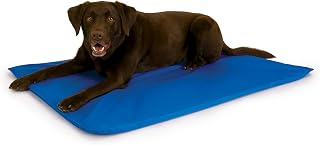
Water-filled: K&H Cool Bed III, Large blue
K&H Cool Bed III — Large, 44 × 32 inches, Chill Blue is a water-filled example. The manufacturer’s instructions specify filling, a smooth shaded surface, checking for leaks, and not freezing the bed. Water-filled does not mean continuously refrigerated.
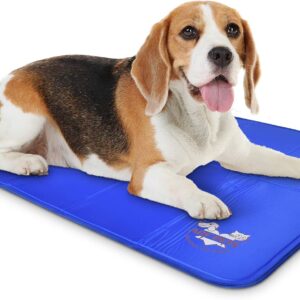
Gel: Arf Pets self-cooling pad
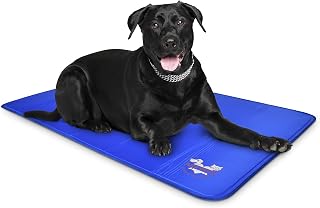
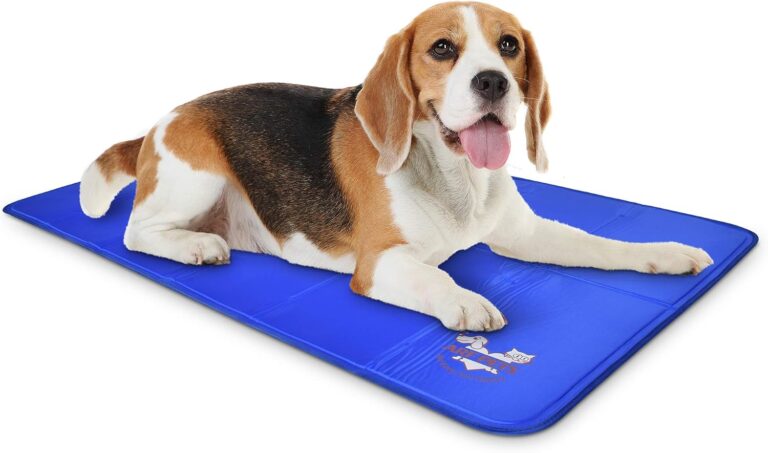
Arf Pets solid-gel self-cooling pad is listed as a gel pad. Confirm the dimensions of this exact listing before ordering; they are not established in our stored description. A “non-toxic” label is not permission to chew or swallow the contents.
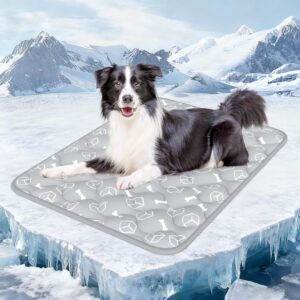
Fabric: Rywell 2.0, Elegant Grey
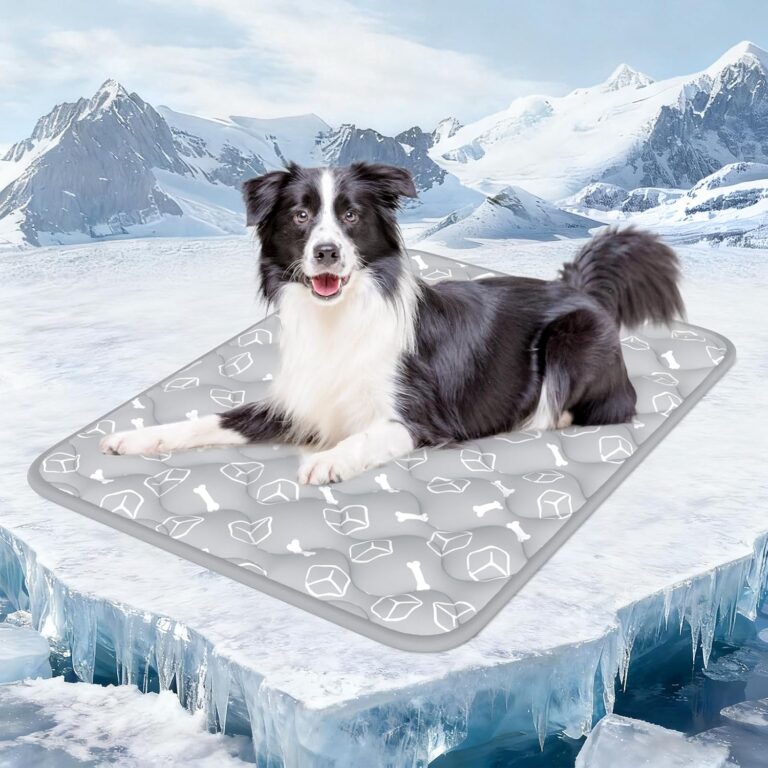
Rywell 2.0 — Elegant Grey, 44 × 32 inches is marketed as an Arc-Chill fiber mat. Its fabric construction should not be confused with a refillable water pad. The listing’s Q-Max figure is a material claim, not proof of a safe ambient temperature or hours of protection for a particular dog.
For choosing a resting surface, start with the Dog Cooling Mats hub. Inspect the instructions for the exact model, not a visually similar mat.
Further Reading
Explore our Dog Cooling Mats guides for related buying considerations. For additional safety background, see the RSPCA’s guidance on cooling mats and heatwave pet care.
Editorial note: This guide is informational and does not claim hands-on product testing or veterinary review. Always consult your veterinarian about your dog’s specific health needs.