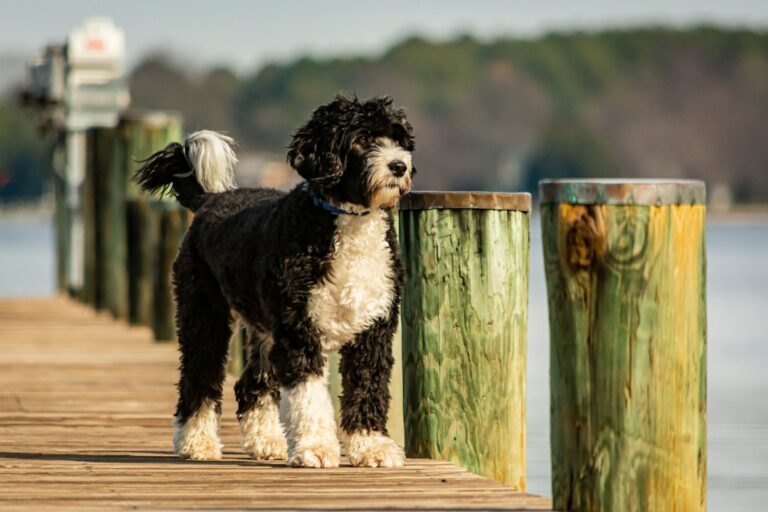
The Bernese Mountain Dog combines a powerful working-dog build with a reputation for affectionate family companionship. Its black, white, and rust coat is memorable, but appearance alone tells you very little about what living with a Berner requires. These dogs are large, shed substantially, need space to move comfortably, and can be expensive to care for. Their relatively short average lifespan and breed-associated health concerns also deserve serious attention before adoption or purchase.
This guide takes a practical view of Bernese Mountain Dog ownership in the United States. It covers size, temperament, grooming, exercise, warmer weather, health screening, family routines, and the costs of supporting a large dog. Rather than promise a perfect gentle giant, it helps you decide whether your actual home, schedule, climate, and budget fit the needs of an individual Berner.
Bernese Mountain Dog: quick breed facts
| Characteristic | Typical breed information | Planning implication |
|---|---|---|
| Origin | Swiss farm and draft work | Sturdy dog developed for purposeful tasks |
| Breed group | Working | Benefits from activity and training |
| Male height | 25–27.5 inches | Large equipment and clearance needs |
| Female height | 23–26 inches | Still a substantial dog |
| Male weight | 80–115 pounds | Transport and physical handling matter |
| Female weight | 70–95 pounds | Budget for appropriately sized supplies |
| Life expectancy | 7–10 years | Health discussions belong at the start |
| Coat | Longer double coat, tricolored | Regular brushing and heavy shedding periods |
The ranges above are from the American Kennel Club breed profile. They are breed-level descriptions, not guarantees for any specific puppy or adult. Ask a veterinarian about an individual’s weight and body condition rather than treating the maximum breed range as a target.
What is a Bernese Mountain Dog’s temperament like?
Berners are often described as calm, good-natured, and attached to their families. Many enjoy being near their people and participating in everyday life. They may be less frenetic indoors than some high-drive herding breeds, but they are not furniture: they still need exercise, training, social exposure, and mental engagement. A big affectionate dog can be physically overwhelming without careful manners around greetings, doorways, and children.
Individual personalities differ. Some are outgoing, others reserved with strangers, and some may struggle with particular environments. Early socialization should mean positive, manageable experiences rather than forcing the dog to greet everyone. Reward gentle behavior and create a comfortable retreat where the dog can rest without being disturbed.
Why size changes everything
An adult Berner may weigh as much as a small person. That affects much more than the size of the food bowl. Can you lift or assist the dog if it becomes injured? Does it fit safely in your vehicle? Can you manage muddy paws, a wet coat, and stairs? Is your home arranged so the dog can turn around without slipping on polished floors? These mundane questions are essential parts of responsible ownership.
Training loose-leash walking before a dog reaches full strength is particularly useful. Children and older family members should not be expected to physically restrain a dog they cannot safely control. If you live upstairs, consider how mobility would be managed after surgery or during age-related discomfort. Planning these details early is kinder than confronting them for the first time during an emergency.
Exercise: moderate activity, not endless endurance
The Bernese Mountain Dog’s working ancestry supports outdoor activity, but its exercise needs differ from those of a compact endurance herder. Healthy adults often enjoy steady walks, hikes in suitable weather, training games, and activities shared with their families. The AKC describes at least a half-hour of moderate daily exercise as a broad guideline; individual needs vary with age, health, conditioning, and weather.
Puppies should not be pushed into repetitive high-impact exercise or long forced runs. Their growing bodies need age-appropriate movement, rest, and veterinary guidance. Adult dogs also need recovery after strenuous activity. For an older or arthritic Berner, shorter comfortable outings and mentally engaging indoor activities may be more appropriate than ambitious mileage goals.
Outdoor activities that may fit
- Leisurely walks with room to sniff and explore.
- Cool-weather hikes matched to the dog’s conditioning.
- Reward-based obedience, rally, tracking, or gentle scent games.
- Appropriately trained carting or drafting activities with expert guidance.
- Low-impact play that does not require repeated hard braking or jumping.
The best activity is one the dog can complete comfortably and recover from well. Stop when the dog appears distressed, weak, excessively hot, or lame, and contact a veterinarian as appropriate.
Heat, humidity, and summer routines
Berners were developed in a comparatively cool climate and carry a thick coat. Owners in hot US regions should pay particular attention to heat management. Schedule outdoor activity when conditions are cooler, provide shade and fresh water, and never leave a dog in a parked vehicle. Avoid assuming that a cooling mat or a shaded yard makes dangerous heat safe. Heavy panting, weakness, collapse, or other concerning signs require immediate veterinary attention.
Plan summer routines around the individual dog’s comfort. Indoor enrichment and brief outings may be more suitable during periods of intense heat or humidity. A dog with a thick coat cannot simply choose to remove that insulation, so the household must adapt. Our existing cooling mat safety guide explains limitations of one optional accessory, but environmental management remains the foundation.
Coat care: expect regular brushing and seasonal shedding
The Bernese Mountain Dog has a longer outer coat and wooly undercoat. The AKC recommends routine brushing, with much more frequent attention during heavier shedding periods. Loose hair can collect around the home, and mats may form in friction areas such as behind the ears or around the legs. A slicker brush and appropriate comb may help when used correctly; ask a professional groomer to demonstrate gentle techniques rather than scraping repeatedly over the skin.
Bathing frequency depends on actual condition and skin needs. Dry the coat thoroughly after wet outings and check for debris, irritation, or hidden mats. Regular nail care, ear checks, dental care, and paw inspection remain important even for a dog whose beautiful coat gets most of the attention. Our dog shampoo guide
Should you shave a Bernese Mountain Dog in summer?
Do not assume shaving a double coat is an effective or harmless cooling strategy. Coat management should be discussed with a qualified groomer or veterinarian who can assess the individual dog’s condition. Removing large amounts of coat may alter its protective function and regrowth. Practical heat precautions—timing walks, access to a cool indoor environment, and avoiding overexertion—remain crucial regardless of haircut.
Health: discuss screening and real risks early
The breed’s 7–10 year typical life expectancy is shorter than many prospective owners expect. This does not predict exactly how long an individual dog will live, but it is a reason to research health information carefully. The AKC identifies screening concerns such as hip and elbow dysplasia, certain blood disorders and cancers, eye conditions, and the risk of gastric dilatation-volvulus (often called bloat or GDV) in large, deep-chested dogs. These topics deserve conversations with a veterinarian, not self-diagnosis from a general guide.
The Bernese Mountain Dog Club of America health statement outlines screening recommendations for breeding dogs, including hips, elbows, eyes, heart evaluation, and specific genetic tests. If buying a puppy, request verifiable documentation for both parents and ask the breeder to explain what each result does and does not mean. A verbal “vet checked” assurance is not the same as a transparent screening record.
Understanding bloat as an emergency
GDV is a life-threatening condition that requires emergency veterinary attention. A rapidly swelling abdomen, unproductive retching, marked distress, weakness, or collapse may indicate an urgent problem; do not wait for a home remedy or internet advice. Ask your veterinarian about risk factors and whether any preventive procedure or feeding management is appropriate for your dog. General information cannot replace an individual risk discussion.
Mobility and joint comfort
A large dog’s weight makes healthy body condition, appropriate activity, secure flooring, and accessible resting areas important. If a Berner becomes reluctant to stand, climb stairs, or walk normally, ask a veterinarian to assess the cause. Do not assume that an orthopedic bed alone treats arthritis or an undiagnosed condition. ANIMOX’s orthopedic beds for large dogs compares support and usable sleeping space as equipment choices, not medical cures.
Feeding, growth, and body condition
A Bernese Mountain Dog puppy needs a nutritionally appropriate growth diet, and a veterinarian can help assess which formula fits the individual’s age and projected adult size. Do not attempt to accelerate growth with extra calories or supplements. Adult dogs should be fed to maintain a healthy body condition, with portion changes based on weight trends, activity, and veterinary advice. Treats count toward total intake and should not become a substitute for a balanced meal plan.
Owners often focus on the cost of large bags of food, but ongoing expenses include routine veterinary care, parasite prevention, grooming, training, transportation, and possible specialty treatment. Set aside a realistic contingency fund. A household that can comfortably afford a puppy’s purchase price may still need to plan carefully for long-term costs.
Training a very large but sensitive dog
Begin teaching calm greetings, loose-leash walking, recall, handling, and safe settling early. A dog does not need harsh corrections to learn boundaries. The AKC notes that Berners are often responsive and may be sensitive to rough methods. Use rewards, consistent household rules, and brief practice in varied settings. A qualified reward-based trainer can help with leash pulling, jumping, or anxiety before those behaviors become difficult to manage at full adult size.
Practice cooperative veterinary care: stepping onto a scale, accepting gentle paw checks, and entering a vehicle calmly. These skills will be valuable throughout the dog’s life. Also teach children how to give the dog space and avoid startling a sleeping animal. No breed’s reputation for gentleness eliminates the need for supervision.
Bernese Mountain Dogs with children and other pets
Many Berners enjoy family life, but individual temperament, socialization, and the environment shape interactions. Their sheer size can knock over a small child unintentionally. Keep play calm, supervise actively, and separate the dog from chaotic situations when needed. Teach children never to climb on the dog, pull the coat, or interfere with food and sleep.
Introductions to other dogs should happen gradually with appropriate supervision. A calm adult dog might respond well to another pet, while a young, excitable dog may need structured practice. Do not rely on generic breed compatibility lists to predict an individual animal’s behavior. When adopting, ask about the dog’s actual history and observed responses.
Apartment, suburban home, or rural property?
A large breed needs enough usable indoor space to rest and move without constant collisions, but a giant backyard does not replace walks or attention. An apartment owner who can manage safe movement, stairs, transport, grooming, and predictable exercise may be more prepared than a rural owner who assumes the dog will entertain itself. Consider practical constraints such as building size limits, elevator access, heat exposure, and whether the dog can be assisted during illness.
If you move often, think about pet-friendly housing, vehicle size, and the number of people needed to relocate or lift equipment. Large dogs affect daily logistics, and those details are not trivial. The best home is one that can consistently meet the individual’s needs rather than a particular postal code or yard measurement.
Choosing beds, collars, and other equipment
Before buying a bed, measure the dog’s sleeping posture, not just the advertised breed size. A Berner that sleeps stretched out may need more flat usable area than a curled-up sleeper of similar weight. Check whether the surface is easy to access, stable on the floor, and practical to clean. See our guide to choosing a dog bed and the specialized large-dog orthopedic bed comparison for separate buying decisions.
Walking equipment must be sized carefully and used with training. A strong dog can exert significant force on a leash; do not rely on a fashionable collar alone to solve pulling. Identify suitable harness or collar options based on fit and the dog’s behavior. A comfortable grooming station, non-slip mat, and large towels may be more useful purchases than gadgets with unverified claims.
How to evaluate a breeder or rescue
- Ask to see transparent health-testing documentation rather than accepting broad assurances.
- Discuss the parents’ temperaments and the social experiences puppies receive.
- Request veterinary records and a clear explanation of ongoing care needs.
- Ask what support is offered if the dog develops a problem or the household circumstances change.
- For adoption, seek accurate information about adult temperament, medical history, and handling needs.
- Meet dogs in appropriate settings and avoid making the decision entirely from photographs.
- Consider the financial and emotional reality of a large breed with a relatively short typical lifespan.
Frequently asked questions
How big does a Bernese Mountain Dog get?
The AKC lists males around 80–115 pounds and females around 70–95 pounds, with typical height ranges of 25–27.5 inches for males and 23–26 inches for females. Individuals vary and should be assessed by healthy body condition.
Do Bernese Mountain Dogs shed a lot?
Yes. Their double coat sheds regularly and can shed heavily during seasonal coat changes. Routine brushing and frequent home cleaning are realistic ownership requirements.
Are Bernese Mountain Dogs good with children?
Many are affectionate with their families, but their size and individual temperament require active supervision. Children should learn respectful, calm interactions and the dog needs a protected rest space.
Can a Bernese Mountain Dog live in a hot climate?
Some live in warmer regions with careful management, but heat and humidity require serious precautions. Provide a cool indoor environment, adjust activity timing, monitor comfort, and seek veterinary advice about individual risk.
How long do Bernese Mountain Dogs live?
The AKC gives a typical range of 7–10 years. This is an average expectation, not an individual prognosis; genetics, disease, accidents, and care all matter.
Are Bernese Mountain Dogs good first dogs?
They may suit a well-prepared first-time owner who has time for training and the resources for a very large dog. Size, shedding, health risks, and logistics can make them difficult for a household that has not planned ahead.
Bottom line: choose the lifestyle, not only the beautiful coat
A Bernese Mountain Dog may bring deep companionship and a calm presence to a prepared home. The tradeoffs are substantial: coat care, physical handling, heat planning, potential veterinary expenses, and a shorter typical lifespan than many other dogs. Talk with breeders or rescues who are open about health and temperament, meet individual dogs, and evaluate your household’s daily routine honestly. A thoughtful match gives both the owner and the dog a better starting point.
Sources: American Kennel Club: Bernese Mountain Dog; AKC: Is a Berner Right for You?; Bernese Mountain Dog Club of America health statement.