On this page
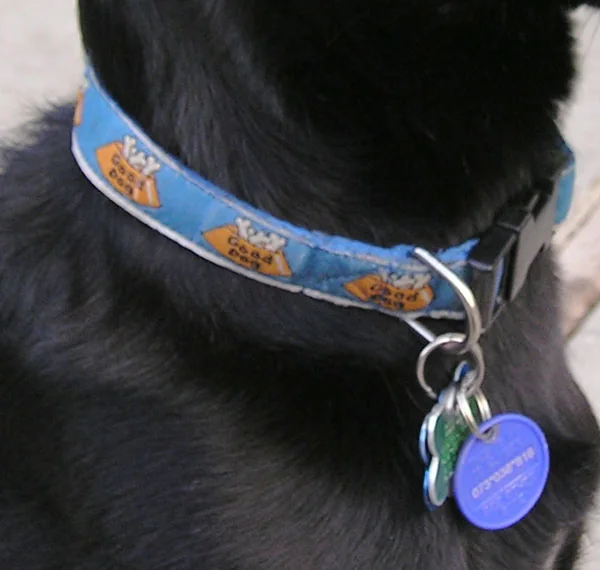
Dog tags are one of the smallest purchases in pet care, but they serve a clear purpose: helping someone contact you if your dog is found. The best tag is readable, securely attached and updated when your contact details change. A decorative tag with tiny engraving may look attractive while being difficult to use in a stressful situation.
Compare types of dog tags
| Tag type | Strength | Trade-off | Best use |
|---|---|---|---|
| Engraved metal disc | Durable and easy to find | Can jingle; lettering may wear | Everyday ID |
| Slide-on or collar-mounted | Quieter than hanging tags | Must match collar width | Dogs bothered by jingling |
| Silicone tag | Quiet and lightweight | Printing may wear; check durability | Noise-sensitive households |
| QR-code tag | Can link to an updated profile | Depends on phone access and service | Supplement to direct contact details |
| GPS tracker | May report location via electronics | Battery/subscription; not a simple ID tag | Optional additional location support |
What information belongs on an ID tag?
At minimum, use a phone number that someone can actually reach. Depending on local rules and available space, include a contact name and another contact route. Avoid publishing sensitive information needlessly. Keep engraving legible and confirm every digit before fitting the tag. A QR code is helpful only if the finder can scan it and the service is active; always provide an immediately usable contact route too.
Fit and maintenance checklist
| Check | What good looks like |
|---|---|
| Attachment | Split ring or slide-on mount closes securely |
| Readability | Text can be read without magnification |
| Comfort | No sharp edges or rubbing points |
| Noise | Dog tolerates movement without distress |
| Updates | Phone number checked after moves or number changes |
Dog tags versus microchips
A microchip is a backup identifier, not a GPS tracker, and usually requires a scanner to retrieve its number. A visible tag can be read immediately by a neighbor or passerby. Combining both provides a more resilient identification setup. Keep registration details up to date and check the tag whenever you inspect collars or harnesses.
Choose the layout before choosing the decoration
Ask the engraver how much information remains readable at the selected size. A design preview shown large on a laptop can conceal how small the final lettering will be. Put the most useful contact information where a finder can locate it easily, and review every character before approving the order. A second contact route can be valuable, but extra words should not make the primary number hard to read.
Compare contrast and spacing as well as the metal or material. Reflective finishes, decorative fonts and tightly packed text can look attractive while making quick reading more difficult. Consider whether a person could read the tag outdoors in ordinary light without turning it through several angles. A practical tag does not have to be plain, but decoration should not compete with its identification purpose.
Match the attachment to the way the collar is used
A hanging tag needs a secure attachment that is compatible with the collar’s designated identification point. A slide-on tag needs the correct collar width and construction. Before ordering, look at where buckles, adjustment sliders and stitching sit; an identification plate may not fit every part of the strap. Follow the collar and tag manufacturers’ instructions rather than improvising a connection that could loosen or interfere with the leash attachment.
After fitting the tag, observe the dog during ordinary walking, drinking and resting. Excessively bulky hardware can be awkward for a small dog or bang against a bowl. If jingling is a problem, investigate a quieter mounting design instead of simply removing identification whenever the dog leaves home. A well-chosen arrangement should be straightforward for every caregiver to maintain.
Prepare for travel and temporary care
Before a trip, consider whether the number on the tag will reach someone who can answer while you are away. If the phone plan will not work at the destination, arrange an appropriate reachable alternative. Provide boarding staff or a sitter with separate written contact instructions, including the veterinary practice and an authorized emergency contact where applicable. The public tag and private care sheet serve different purposes.
Look at local identification requirements for the places you will visit, particularly when traveling across borders or between jurisdictions. Requirements can differ, and this guide is not a substitute for current official rules. A license or vaccination tag may not provide the same immediately useful information as an ID tag. Keeping several kinds of identification organized helps avoid assuming that one decorative disc covers every obligation.
Treat connected tags as a service, not just a piece of hardware
For a QR tag, find out what happens if the subscription ends, the company changes its website or the owner loses account access. Read how updates are made and which details a stranger can see. A tag that depends on a profile should be tested periodically from a device that is not already signed into the owner’s account. A profile that looks correct to the owner may behave differently for a finder.
Record the service name and account recovery process in your private care documents. Avoid putting login credentials on the tag or in the public profile. If you change providers, update the physical identification rather than leaving a dead code attached indefinitely. Keeping a directly readable phone number gives a finder an alternative when the service or mobile internet is unavailable.
Inspect identification as part of a familiar routine
Choose a recurring moment, such as washing a collar, to inspect the lettering and attachment. Look for worn edges, opening rings and dirt covering the information. Check the tag again after rough outdoor activity or a change of collar. An inspection takes little time when it is linked to a task the household already performs.
Replace inaccurate information promptly after a number change. A temporary handwritten label should not become a long-term arrangement if it fades or cannot tolerate ordinary moisture. Keep the previous accurate tag as a short-term spare only when its contact details remain valid. A drawer full of attractive old tags is not useful if none reaches the current owner.
Keep microchip records separate and up to date
Ask the veterinary practice or appropriate registry how to confirm registration details and what to do when ownership changes. A visible tag can fall off or become damaged, so the microchip record should not be neglected simply because the collar looks well equipped. Equally, a microchip does not provide a readable phone number to someone without a scanner.
When adopting a dog, make the record transfer part of the handover checklist. Keep the identifying paperwork somewhere you can access without relying on a single phone. If the dog is lost, current records and a clear recent photograph may be more helpful than a vague description of its collar. Discuss a local lost-pet response plan before an incident occurs rather than trying to work it out under pressure.
A sensible purchasing decision
Choose the simplest tag that remains legible, fits the collar correctly and suits your maintenance routine. For a dog bothered by noise, mounting style may matter more than color. For an owner who travels, flexible contact information may matter more than engraving a long message. For a growing puppy, the ability to inspect and refit the whole collar setup matters more than buying an expensive permanent accessory immediately.
There is no universal best material or design for every dog. Use the comparison above to identify trade-offs, then examine the actual product’s construction and instructions. Avoid interpreting a listing’s words such as secure, lifetime or waterproof as guarantees that the tag cannot be lost or damaged. Identification works best as a maintained system with more than one route back to the owner.
Make the engraving order easy to verify
Prepare the exact text in a plain document, then compare it with the seller’s final preview line by line. Read phone numbers aloud to another adult rather than relying only on visual familiarity. Confirm whether the preview represents the front, back or both sides of the tag and whether optional symbols reduce the available lettering area. Keep the approved version with the order confirmation so a manufacturing error can be identified promptly.
When the tag arrives, examine the actual item before discarding packaging or fitting it to the collar. Compare the engraving with the approved text and check for sharp edges or defective attachments. If something is wrong, arrange a replacement instead of assuming a finder will work out a missing digit. Keep the previous accurate identification in place while the problem is resolved. A careful final check is a more useful purchase habit than selecting an elaborate design and reading the finished details for the first time after the dog has already started wearing it.
Frequently asked questions
What should a dog tag say?
A reachable contact number is the priority. Check local identification requirements and avoid unnecessary sensitive details.
Can a dog tag replace a microchip?
No. A visible ID tag and an up-to-date microchip serve different functions and work best together.
Are QR dog tags enough?
Use them as an optional supplement; a finder may not have a compatible phone or internet access.
How often should I replace a tag?
Replace it whenever lettering becomes unreadable, the attachment is unsafe or your contact information changes.
Continue reading on ANIMOX
Reference material and editorial verification
This informational guide does not replace individual veterinary or behavioral advice. No hands-on product testing is claimed.
Why dog tags still matter in the age of microchips
A microchip is essential, but it is not visible to the person who finds a lost dog. A readable identification tag remains one of the quickest ways to help a dog get home. For many households, the best safety plan includes both a microchip and a tag attached to a secure collar or harness.
What information belongs on a dog tag
Keep the text simple and useful: the dog’s name, at least one reliable phone number and, if space allows, a second number or an address line that suits your privacy preferences. Check tags regularly for wear and readability.
Final takeaway
Choose a durable, easy-to-read dog tag and pair it with updated identification habits.
Photo: The original uploader was Elf at English Wikipedia . / Wikimedia Commons, CC BY-SA 3.0. Resized and converted to WebP.