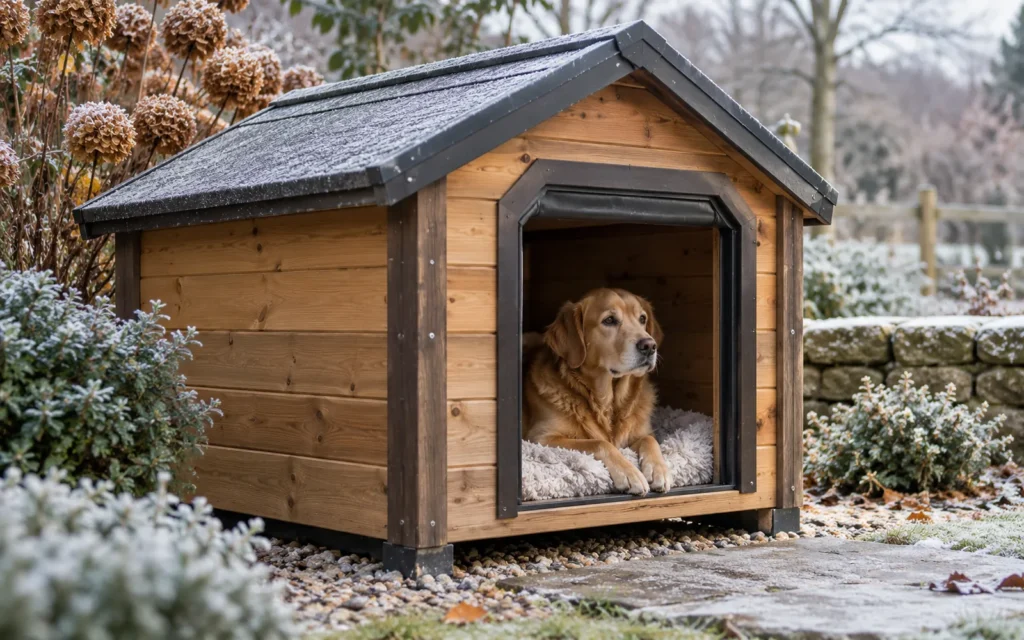
An insulated dog house can offer a more sheltered resting place outdoors, but insulation alone does not make a shelter suitable for every dog or climate. Start with your dog’s size, the placement of the house, and how you will keep its interior dry and clean. This guide explains the practical checks to make before comparing products in our Insulated Dog Houses hub.
Measure the space your dog can use
Measure your dog while standing and resting, then compare those measurements with the manufacturer’s interior dimensions. Exterior dimensions can include thick walls, roof overhangs, or a porch and may overstate the usable space. Your dog should be able to enter, turn around, and lie down comfortably. A very large interior can be harder to keep sheltered from drafts, so bigger is not automatically better.
Check the doorway and floor
Look for a doorway your dog can use without squeezing or crouching excessively. A raised floor can help separate bedding from damp ground, but it only helps if the structure is stable and the space beneath it stays clear. Confirm the floor’s load guidance for your dog’s size.
Understand what “insulated” means on the listing
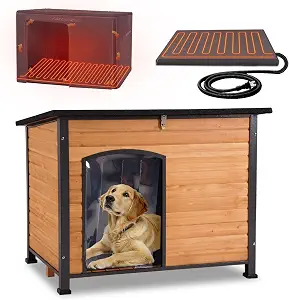
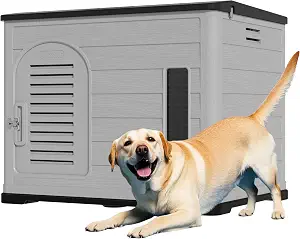
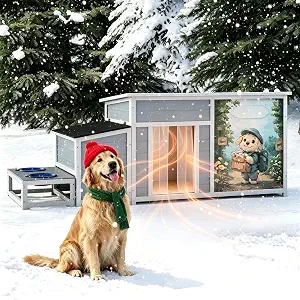
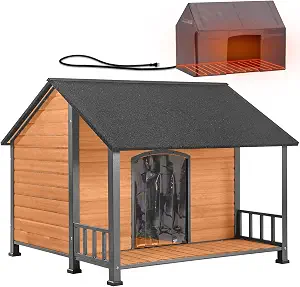
Product listings use the term in different ways: a built-in double wall, a removable liner, insulated panels, or a heated pad. Check which parts of the house are insulated and whether the liner can be removed for cleaning. For example, the Diyokai insulated plastic dog house lists a double-layer structure, while the GUTINNEEN heated insulated dog house lists a thermal liner and heating pad. Those are different designs and should not be treated as interchangeable.
Balance weather protection with ventilation
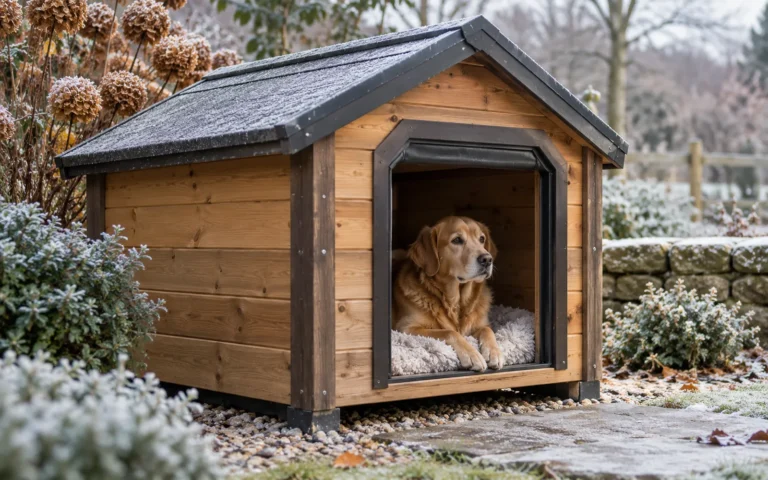
A protected doorway and secure roof can reduce exposure to rain and wind, but moisture still needs a route out. Look for the manufacturer’s ventilation details and avoid blocking air openings with bedding or a wall. Check roof seams, drainage, and whether the entrance faces the prevailing wind at your chosen location.
Choose materials you can maintain
Wood, plastic, and resin each demand different care. With wood, inspect finishes, joints, and the condition of the roof over time. With plastic or resin, check panel connections, floor support, and cleaning access. Removable roofs or liners may make routine cleaning easier, but verify how those parts fasten before buying.
Place and use the house responsibly
Set the house on a stable surface away from standing water. Shade matters in warm weather; an insulated shelter can still heat up in direct sun. A sheltered outdoor house is not a substitute for appropriate indoor care during dangerous weather. Consider your individual dog’s age, health, coat, and ability to come indoors when deciding how the shelter will be used.
Before you buy
- Confirm usable interior and doorway measurements with the merchant.
- Check whether insulation is built in or supplied as a removable accessory.
- Verify the materials, assembly requirements, cleaning access, and any electrical safety instructions.
- Confirm the current price, availability, and return terms on the merchant listing.
For a closer look at one heated model, read our GUTINNEEN feature review. Our heated versus passive-insulation comparison explains how to weigh different approaches without assuming one is best for every dog.